With its smallest Bonneville, Triumph Motorcycles has brought back a lot of memories, but does the 350-cc Bonneville deserves the iconic name? We find out
Story: Ravi Chandnani
Photography: Chirayu Gijare
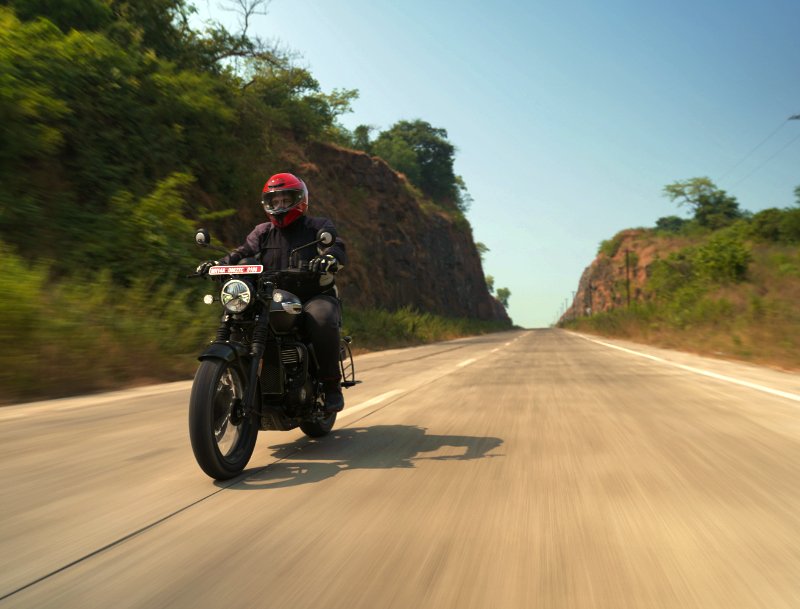
Motorcycling is all about freedom, freedom to do anything, even if that means creating a 350-cc motorcycle that wears a legendary name like Bonneville. That’s exactly what Triumph has done; they have introduced the Bonneville T40, the smallest Bonnie ever. It promises the same character as the older, bigger Bonnies, but with a 350 cc engine. Does it justify the legendary nameplate, or will it be just another small motorcycle wearing a big badge? To find out, I rode the Bonneville T40 Black on the western side of the Sahyadri mountain range, and this is the complete lowdown.
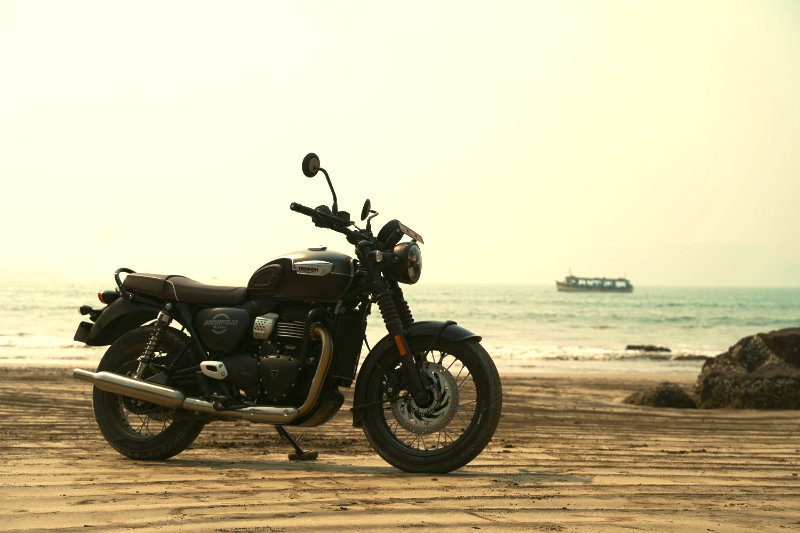
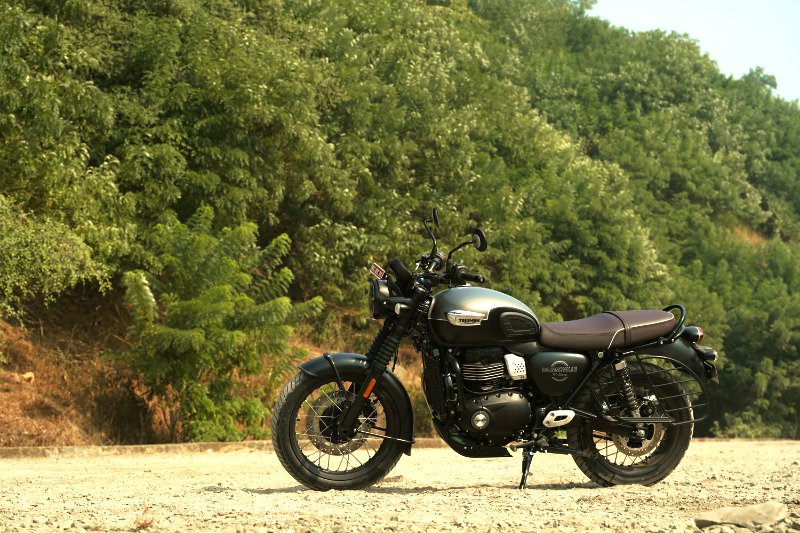
The Bonneville T40 Black, which is draped in an all-black aesthetic, looks quite interesting. What you get is a motorcycle that looks retro from every angle. The tank looks gorgeous with a retro monogram and hand-painted pinstriping. The side panels are made of plastic; however, there is heavy use of metal throughout, including the front fender stays that hark back to the OG Bonneville 650. Another element that reminds me of the OG Bonnie is the bench seat, which in the T40 comes with cushioning so good that I spent 206 km in the saddle and didn’t feel tired or fatigued.
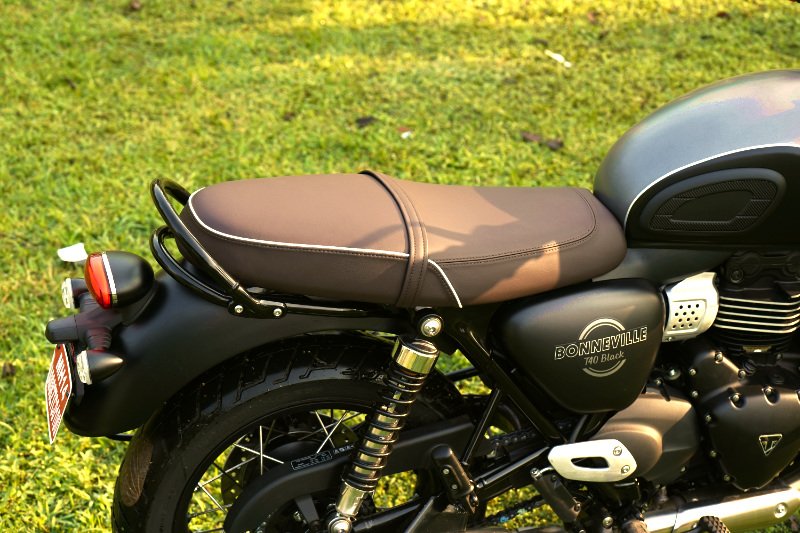
However, in 2026, retro elements don’t really get much fanfare; one example of that is the wire-spoke wheels with tube-type tyres. People on social media are already complaining about this, claiming that tubeless tyres are a no-brainer in 2026. I support that argument to some extent, but Triumph says that these wheels were a conscious choice to maintain the look and feel of the Bonneville family. Conscious choices aside, the Bonneville T40 Black and T40 are basically the same motorcycle, with the T40 featuring far more chrome and the Black being all black. The peashooter exhaust, however, stays the same on both variants. Plus, there is a third variant called the T4; it is the base version and, in my opinion, probably has the best colour options.
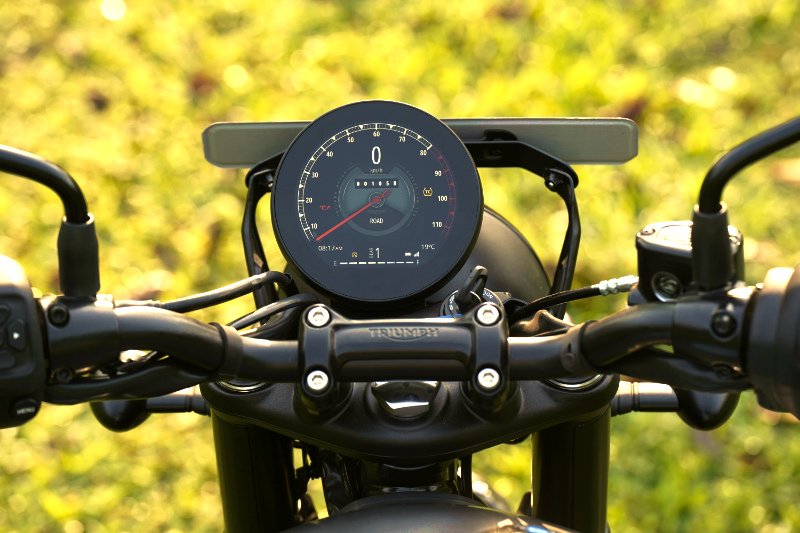
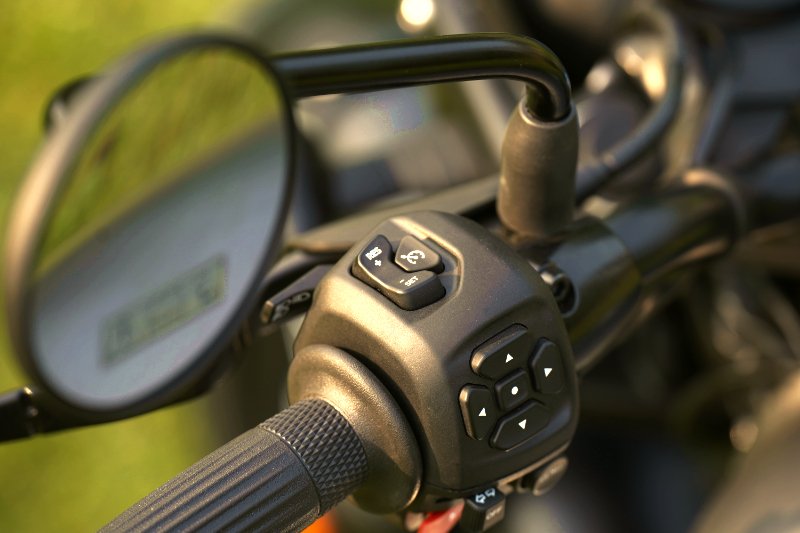
Being a retro motorcycle in today’s world is not enough to attract more customers, because trends in electronics and gadgets dictate market demand. Hence, the smallest Bonneville comes with a whole host of electronics, like a ride-by-wire throttle, multiple riding modes, cornering ABS and Traction Control, and the biggest talking point of them all, the 4-inch round TFT display with a heritage mode. It looks cool; however, it doesn’t feature a day/night mode, so you get a black background that becomes hard to read in direct sunlight, especially when the sun is over your head or shoulders. For me, though, the main and juiciest part is the engine, chassis and its dynamic ability, which I experienced on smooth tarmac, rough roads and even some sand.
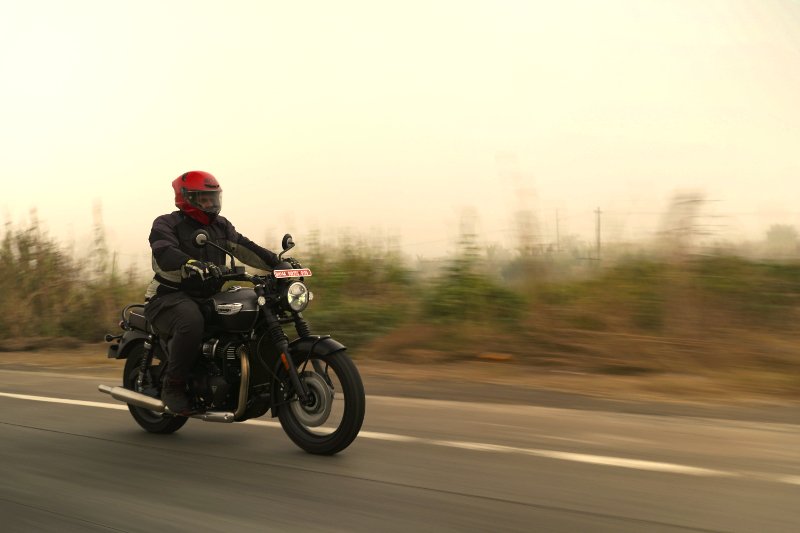
The first thing I realised when I swung a leg over the Bonneville T40 Black was that it felt like the bigger Bonneville T120, partly because it weighs 195 kg, which for a 350-cc motorcycle seems on the heavier side. However, once I started riding the bike, the weight disappears because it is so well distributed. The engine on the smallest Bonnie is a 349-cc, DOHC, single-cylinder, liquid-cooled unit with a six-speed gearbox from the same TR Series lineup seen on Triumph’s 400-series bikes. However, it is in a very different state of tune because the camshaft is reworked, and the intake and exhaust have been modified. The aforementioned changes have resulted in the engine producing 29 hp at 7,000 rpm and 31 Nm at 5,500 rpm, figures similar to the Speed T4. The delivery, on the other hand, is smooth, and the ride-by-wire throttle doesn’t feel twitchy or like an on-off switch. It is linear in feel, although the response is a bit lazy, but nothing that becomes bothersome.
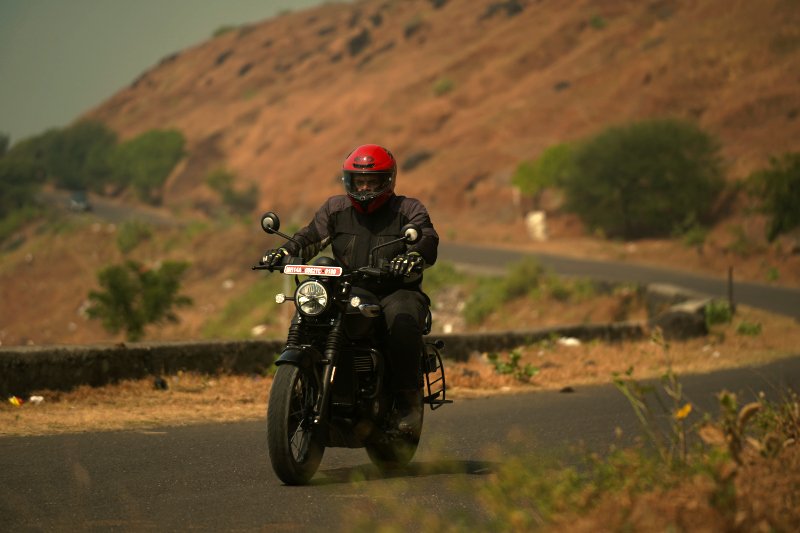
Now, Triumph said in their presentation that the engine characteristic is tuned for a comfortable, laid-back ride, and it became apparent the moment I started riding. I was impressed with the way the torque started flowing from as low as 3,000 rpm, and had a strong pull from 4,000 rpm. However, there is a noticeable buzz from 3,500 rpm that only gets stronger as the revs climb. This means the engine refinement isn’t as good as we have seen on the other 350s from Triumph, but I have to say these vibrations lend the bike a nice character that the older Bonnies had. The vibrations, for me at least, aren’t a deal-breaker on the Bonneville T40 Black, but it was the performance that impressed me most. At highway speeds, the bike maintained 90 km/h in sixth gear, with the engine barely making any effort to keep it there. Even those vibrations reduce to a tolerable level at those speeds. However, the overall feel of the engine and the tall gearbox ratios are designed for comfort rather than speed, and it was quite evident over my 200+ km in the saddle.
Talking of comfort, I have to mention the nice, soft suspension setup that soaked up bumps and undulations with ease; the conventional telescopic fork at the front and twin shock absorbers at the rear provided a well-cushioned ride that kept me comfortable throughout the nine hours I spent on the bike. The setup does rob a bit of handling, and that fat 150-section rear tyre doesn’t really help. Turning into corners is easy, but the bike feels lazy when it comes to agility because it isn’t as agile and nimble as the other 400s in the lineup. Quick direction changes also remind you of its 195 kg weight. However, it still has that Bonneville character, whether on tarmac, where I rode it most, or on rough terrain, where the soft suspension setup came in handy and kept things stable. I have to say, the smallest Bonneville is a comfortable bike that makes touring easy and accessible. Plus, at ₹2.8 lakh for the top-end variants, you get a piece of nostalgia, and if you are Gen Z, this is a good way to experience a slice of what British motorcycles felt like back in the day.