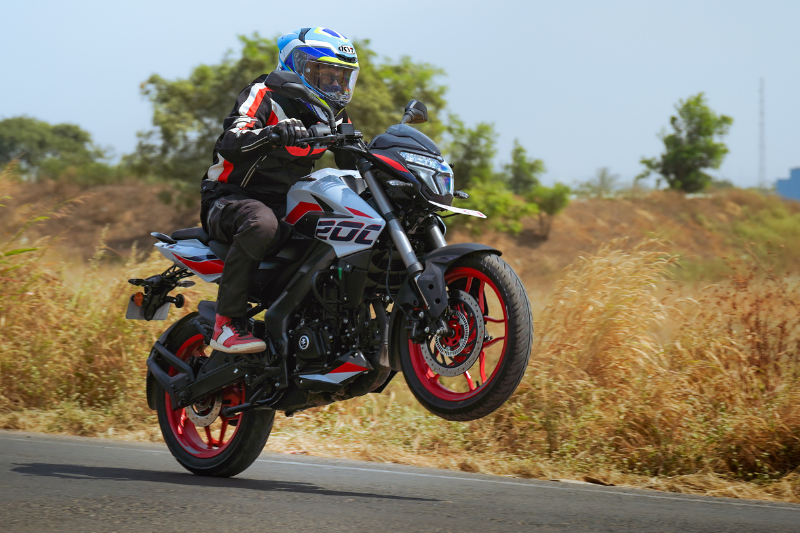
Should you upgrade to the updated NS200? Well, that depends on what you expect from your next motorcycle.
Story: Salman Bargir
Photography: Chirayu Gijare
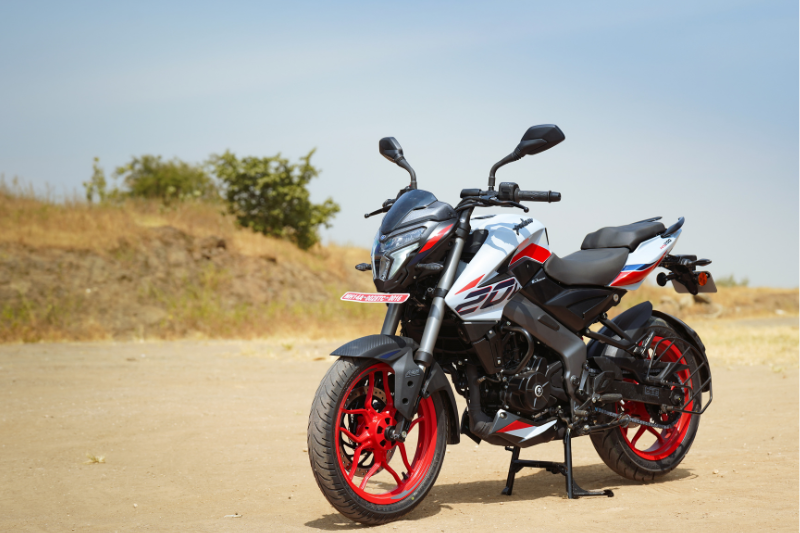
Over the years, the Bajaj Pulsar NS200 has built a reputation for its sharp handling, aggressive riding stance and performance-focused engine. For 2026, the design remains largely unchanged, barring the addition of rubber frame pads and a tank pad. However, Bajaj has given the streetfighter a substantial update, addressing one of its longstanding shortcomings, its feature list.
Starting with what I found personally more interesting, the mechanicals. Its engine now produces an additional 1-hp. According to Bajaj, this increase has been made possible by the introduction of ride-by-wire technology, which allows for more precise air-fuel mixture optimisation and a more aggressive engine map. Further enhancing the riding experience, the six-speed gearbox now gets a bi-directional quickshifter and revised sprocket gearing. The rear sprocket has increased from 40 to 42 teeth, while the front sprocket retains its 14-tooth configuration.
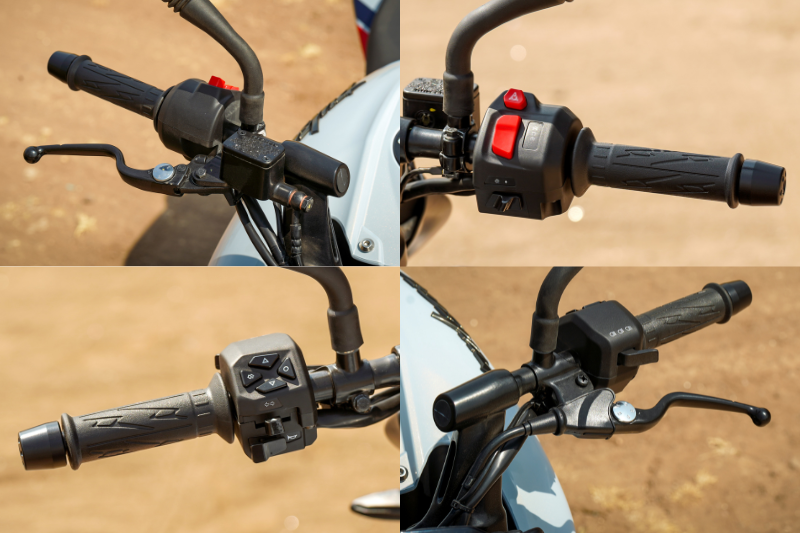
The shorter gearing makes the NS200 feel quicker during acceleration, albeit at the expense of some top-speed potential. Around 5,000 rpm is where the engine starts pulling nicely, with a stronger surge of power closer to 7,000 rpm. This means you need to keep the engine within this rev range to accelerate quickly, while brisk overtakes may call for a downshift. Thankfully, that isn’t much of an inconvenience. The gearbox works well, with gears slotting in nicely, while the light clutch action makes frequent shifts easy. The addition of adjustable levers is a welcome touch, as is the bi-directional quickshifter, which handles its job well.

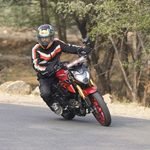
The updated NS200 gets a new 37-mm USD front fork, replacing the earlier 33-mm unit, while the rear monoshock continues to offer seven-step adjustability. The suspension setup is on the firmer side, meaning the bike does not feel particularly happy over bad patches of road. That said, the setup isn’t harsh either, with ride comfort being satisfactory for the most part. The NS200 though, is reassuringly flickable in city traffic while remaining an engaging motorcycle through corners. The tyres, with the rear now featuring a radial-ply construction, offer good grip. As for braking, the front disc delivers a sharp initial bite with a progressive feel, while the rear brake feels slightly lacking, even under strong inputs.
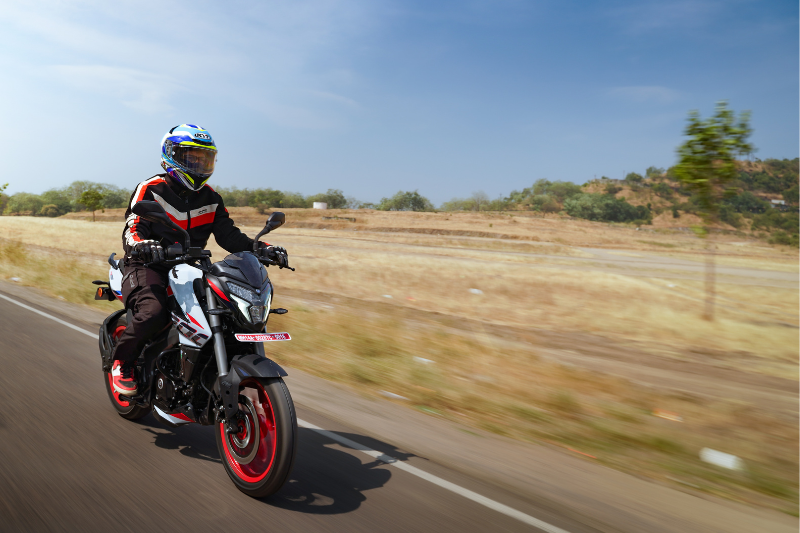
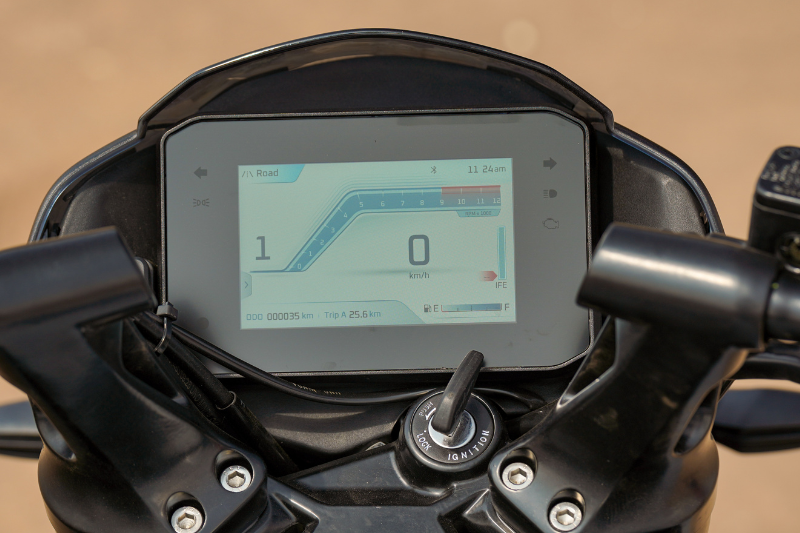
The NS200 now gets multiple ride modes, each offering a different throttle response, ABS intervention and traction control setting. Sport is the most responsive, but Road is the mode I preferred, as its throttle response feels smoother and more progressive. Rain is the least responsive and should suit less experienced riders, while off-road mode offers a steady throttle response and switches off traction control. Adding to the feature list is a new, fairly legible five-inch TFT instrument cluster with Google Maps mirroring and connectivity features. Build quality, fit and finish are good, while another thoughtful addition is the neatly concealed and conveniently positioned USB Type-C charging port. For added safety, the NS200 also gets Panic Brake Alert, which makes the turn indicators flash rapidly under hard braking, serving as a pre-emptive warning to other road users. Also Crawl, the feature that enables the bike to be ridden without accelerating by keeping the clutch engaged, can be useful in slow moving traffic.
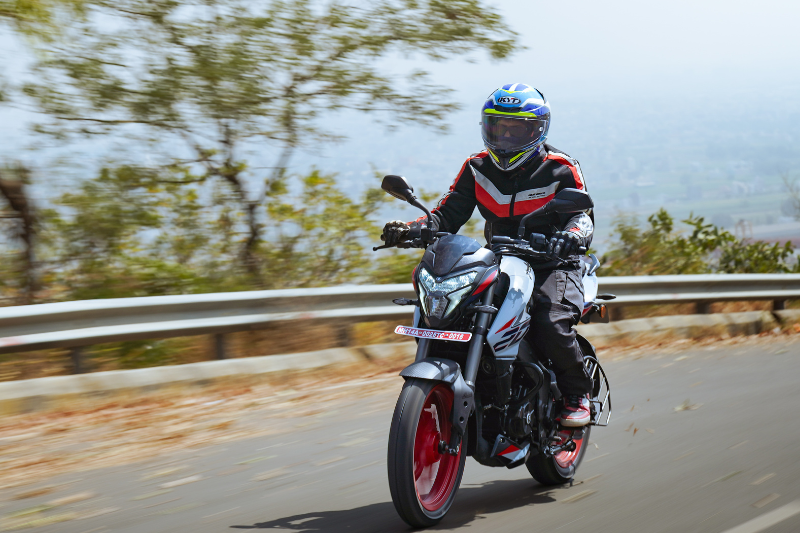
The NS200 is fun and easy to ride in city traffic while being equally capable on the highway. Its sporty riding triangle will appeal to riders looking for an engaging and performance-oriented machine. The Bajaj Pulsar NS200 continues to deliver exciting performance, now complemented by a useful dose of technology. If that is the combination you are looking for in this segment, the updated NS200 is certainly worth considering.