Yamaha hits the refresh button on its R series with the introduction of the YZF-R2, and here is our first impression following a first ride
Story: Anvay Mahajan
Photography: Yamaha India
When Yamaha launched the YZF-R15 in India back in 2008, few would have predicted the impact it would have on the country’s motorcycling scene. Over the years, the “R” family has become one of Yamaha India’s most recognisable brands, second only, perhaps, to now out-of-production icons such as the RX 100 and RD 350. It has remained a favourite among young riders and enthusiasts alike. But now, Yamaha recognised a growing interest in affordable supersport motorcycles in the 200-cc segment and decided to expand the R series by making the global début of the YZF-R2 in India. We had a brief opportunity to ride it at the Madras International Circuit.
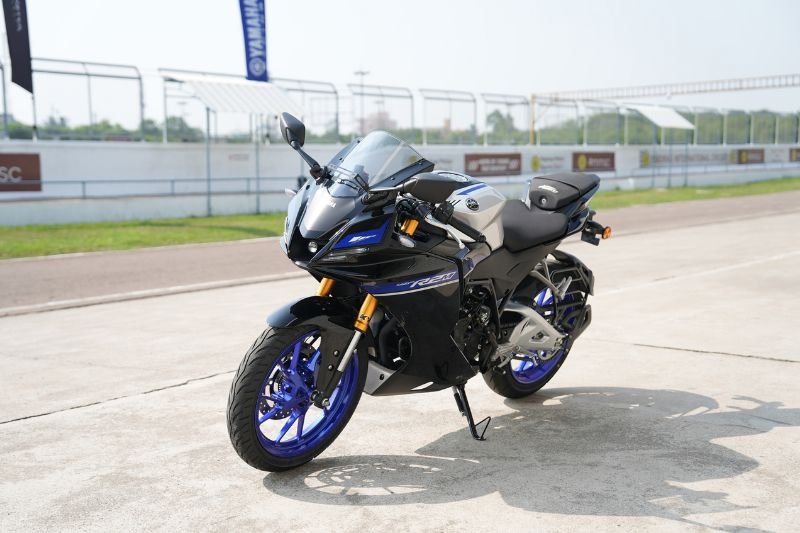
The YZF-R2 (or just R2) has been built from the ground up, although the influence of the R15 is evident. It has a new diamond-type frame that is said to reduce weight by nearly 2.8 kilograms as compared to the delta-box frame. The motorcycle weighs between 149 and 150 kg, depending on the variant, and its lightness is immediately noticeable on the move. The new fairing and aluminium swing-arm add to its sporty appearance, while the handlebar has been positioned slightly higher than that of the R15 to make the riding posture less aggressive. That said, at 5’ 5”, I still found it to be fairly committed.
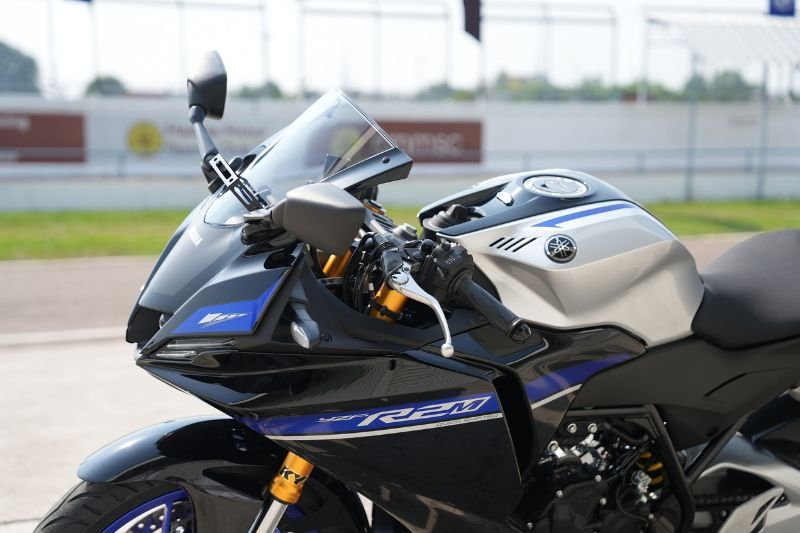
Yamaha offers the R2 in three variants: the standard R2, the R2 with a quick-shifter, and the top-spec R2 M. The last-named gets keyless ignition, preload-adjustable front and rear suspension, and adjustable brake and clutch levers. The R2 M is available in a single colour scheme, though, personally for me, Yamaha R2 with Racing Blue remains the most appealing. Our test ride was conducted on the fully equipped R2 M.
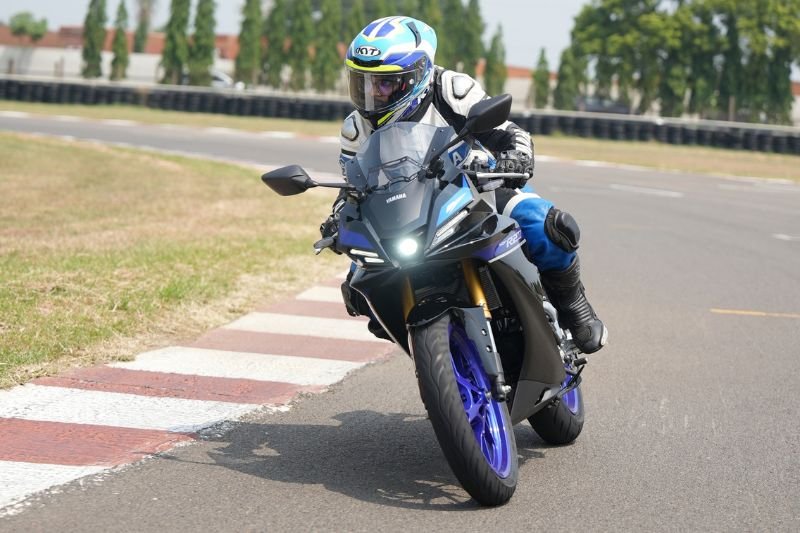
Feature-wise, the R2 gets a five-inch TFT display with Bluetooth connectivity, customisable themes, turn-by-turn navigation, and music controls. Yamaha also offers an accessory package that includes a Racing Kit with seat cowl, winglets, and lever-guards; styling and comfort kit with grab rails, engine covers, tank pads, knee pads; and a phone mount kit with a USB charger and a mobile holder. While accessories such as the winglet, grab-rails, and lever-guards add practicality, the mobile holder arrangement looked somewhat out of place. The complete accessory pack is priced at an additional Rs 7,900, though items can also be purchased individually, but it would cost more.
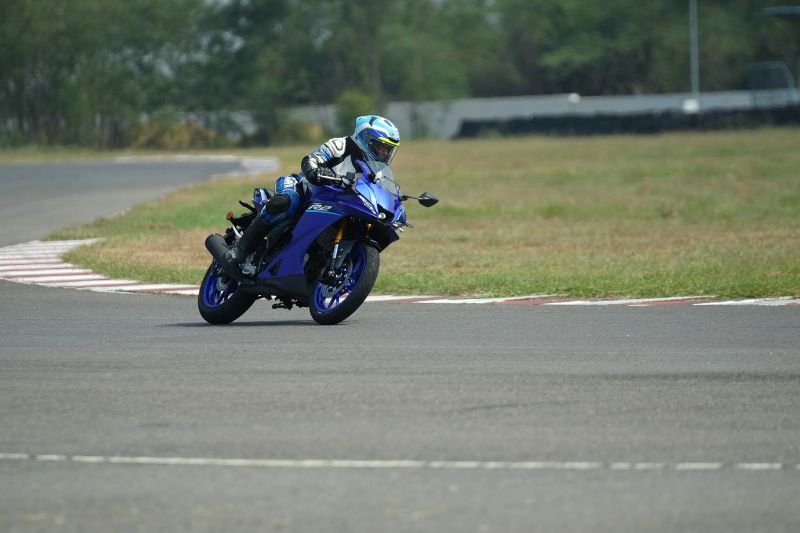
Powering the R2 is an all-new 204-cc, liquid-cooled, DOHC, single-cylinder engine producing 26.5 hp at 10,000 rpm and 19.1 Nm at 8,000 rpm. That is a bump of almost eight hp and five Nm compared to the R15. Also, unlike the R15’s square engine configuration, the R2 uses a short-stroke layout with a 66 x 59.6 millimetre bore and stroke. And it does not get Variable Valve Actuation (VVA). But with a kerb weight of just 150 kg, the motorcycle offers an impressive power-to-weight ratio of around 176.66 hp/tonne. That is almost similar to a Volkswagen Golf GTI if you are a car guy.
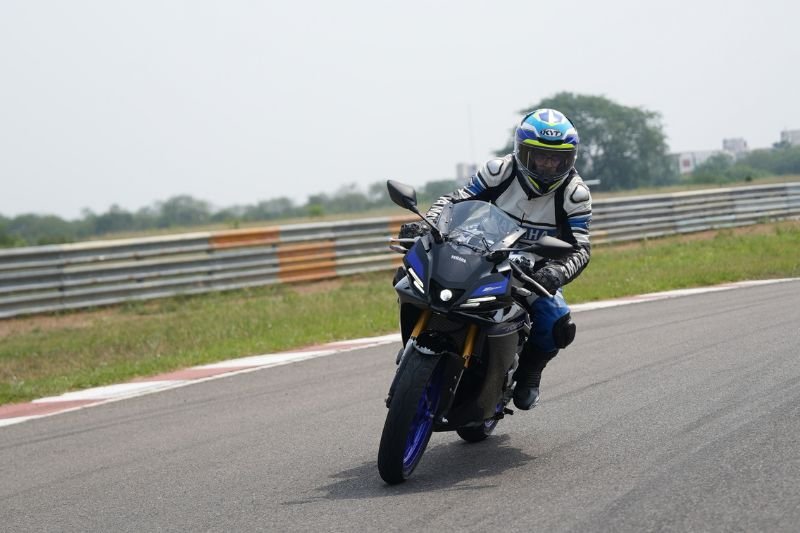
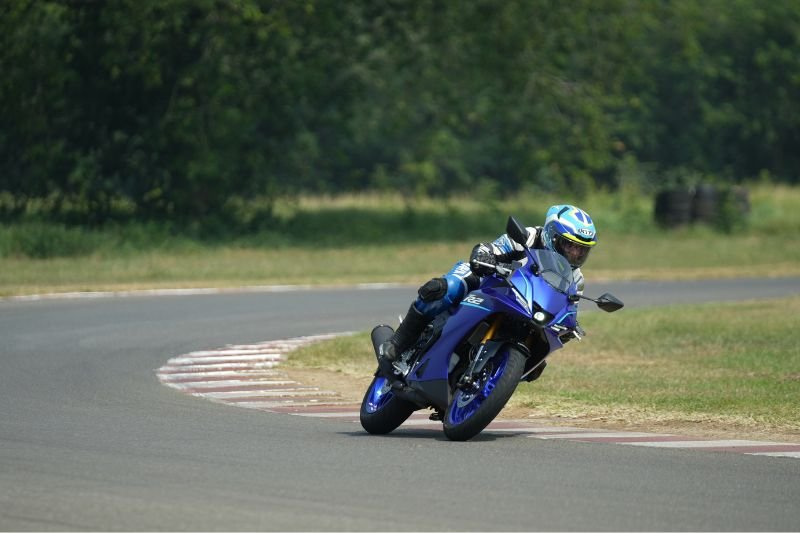
Out on the circuit, the engine felt like it possessed good low-end performance. Vibrations began to creep in beyond 6,500 rpm, particularly through the handlebar and foot-pegs. The R2 offers Street, Sport, and Rain ride modes, though our short track session meant we spent the entire ride in Sport mode. On the long straight, I remember I saw an indicated top speed of 122 km/h.
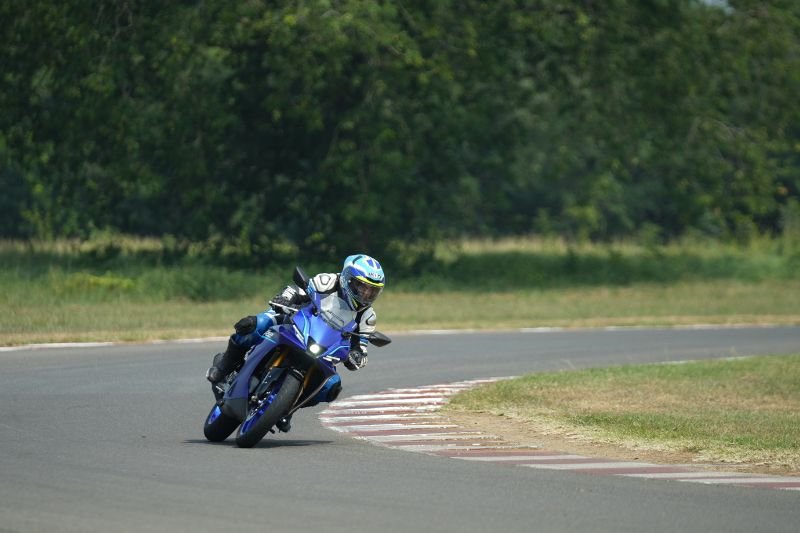
Evaluating a motorcycle after just 20 minutes on track is never easy, but the R2 left a positive impression in terms of handling. It feels light, agile, and eager to change direction, making it a very flickable machine and it is easy to lean in corners too. The preload-adjustable suspension set-up leans towards the sporty side and feels well-suited to track riding. The braking performance, however, could have been stronger, particularly at the front, and the dual-channel ABS felt slightly twitchy.
Priced between Rs 2.31 lakh and Rs 2.50 lakh (ex-showroom) for the R2 M, Yamaha’s newest supersport rivals the KTM RC 200 and Suzuki Gixxer SF 250. For riders upgrading from smaller segment bikes or stepping into the world of supersports or track riding, the R2 could prove to be an exciting and approachable option; although, in my opinion, if someone is upgrading from an R15 to this, the jump would not feel that significant.