Exactly a week before experiencing the Axor MX Carbon helmet, we were at the Ladakh Enduro Park in Leh. I mention this because, taken together, these experiences are an indication of the growing interest in off-road motorcycling in India
Story: Salman Bargir
Photography: Vega and Salman Bargir
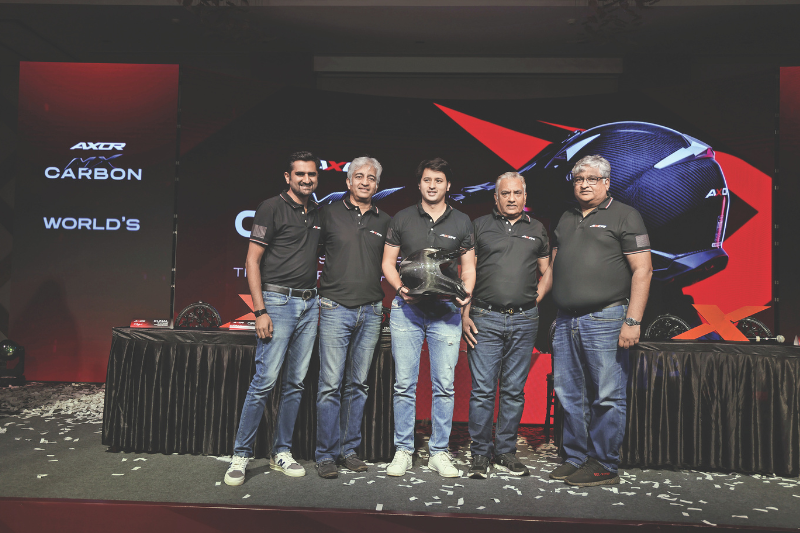
We were in Belgavi, an unusual place to find ourselves for a helmet launch. But this is the home town of Vega, the parent company of Axor Helmets, and the reason for our visit was a significant one: the launch of the new Axor MX Carbon, claimed to be the world’s lightest triple-certified helmet meeting ISI, DOT, and ECE 22.06 standards.
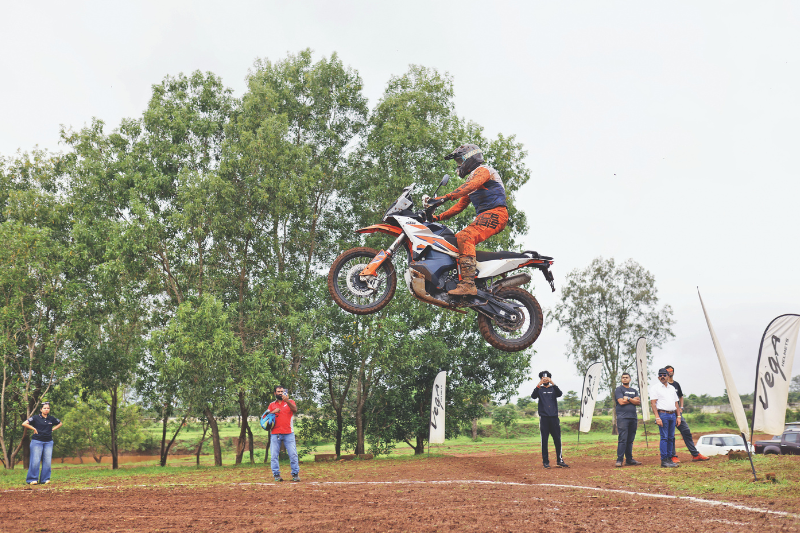
Weighing just over one kilogram, it felt remarkably light both in the hand and on the head. The following day, we got to experience it in its intended environment: a small off-road track on the outskirts of Karnataka’s second capital.
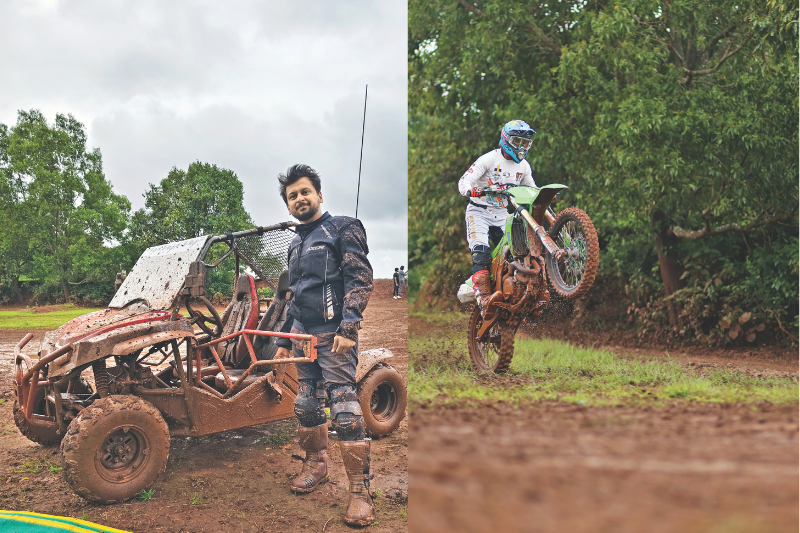
As I reached the dirt track, I was excited to see what was on offer. There were off-road motorcycles, all-terrain vehicles (ATVs), side-by-side sport Utility Terrain Vehicles (UTVs), and even a 4×4. Once I had the necessary gear fitting my size and, of course, the helmet, I spotted an available ATV and went straight in for some slush and slides. It was a brief session, but thoroughly thrilling.
For me, though, the highlight was the 4×4 ride. Seated at the back on the opposite-facing seats, bouncing around as we tackled the terrain, it was great fun. Once the activities were wrapped up, we headed back to our place of stay to clean up and grab a quick bite before making our way to one of Vega’s factories. There, we got a closer look at how its latest offering, along with its other helmets, is manufactured.
While speaking to us, Kunal Chandak, Director, Vega revealed that Vega had been working with carbon-fibre for nearly three decades. Over the years, the company has developed an understanding of the material’s chemistry, blends, moulding processes, and the various technical nuances involved in working with it.
One example is the D-ring on the MX Carbon, which has been optimised to save five grams without compromising its strength or functionality. The company later demonstrated this to us in a rather dramatic fashion. The D-ring was attached to a Bajaj Pulsar motorcycle below, while the top of the helmet was connected to a crane. The crane then lifted the helmet, with the motorcycle attached to it, clean off the ground, with no visible sign of strain or damage to the helmet.
Vega also demonstrated the toughness of its TT Revo visor. A pickup truck weighing approximately two tonnes was driven over it, yet the visor remained intact.
The final demonstration was a drop test, with the helmet being dropped from a height of more than 20 feet on to a hard, flat, metal beam. Despite the impact, there were no visible signs of damage.
These are among the several tests conducted in-house at Vega’s NABL-accredited facility, including laser tracking and thermal-chamber durability testing. According to the company, it is the only helmet manufacturer in India to have such a facility.
During the factory tour, Research and Development Head Uttam Chandak also introduced us to the materials used in manufacturing and explained the processes involved. For instance, the MX Carbon uses the same Kevlar material found in bulletproof jackets.
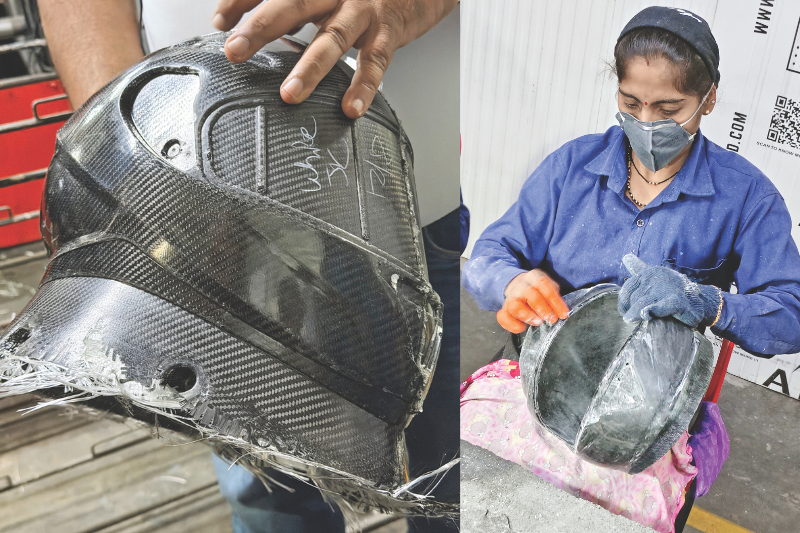
He also explained to us some of the specialised techniques involved, including pre-pregging, precision cutting, hand-finishing, and abrasive waterjet cutting. The last-named is carried out in a separate chamber using a specialised machine that shoots water at an extremely high pressure to precisely cut through the material. Since there is no heat involved, the process avoids heat damage and delamination, helping achieve the required fit and finish.
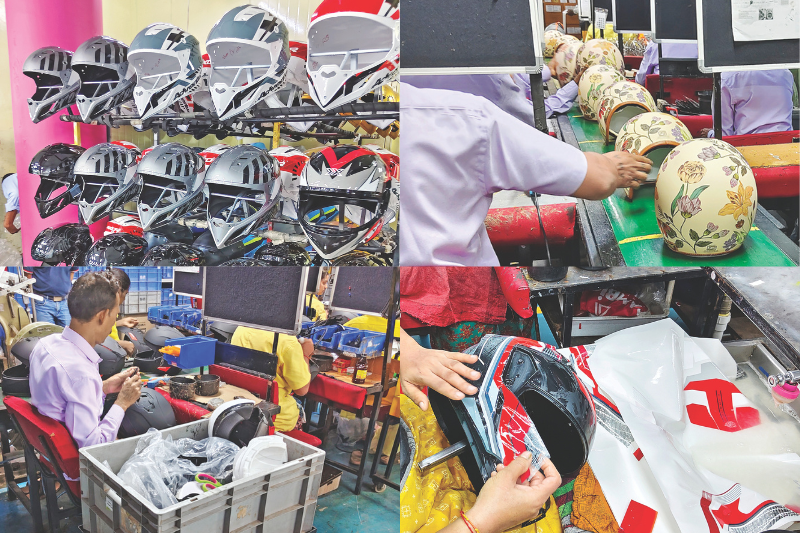
All in all, it was an edifying experience to get to know what goes into making a helmet and an opportunity to gain a better understanding of what lies beneath the finished product. I was also impressed by the number of women employed at the factory, particularly in tasks that demand finesse and precision in helmet manufacturing.
As part of its CSR initiative, Vega also supports budding riders. One such rider present at the event was Jinendra Sangve, who made history by becoming the youngest SX2 National Champion in the MRF National Supercross Championship.
The company has plans to introduce more helmets based on the same technology and construction, designed for road and track use. We look forward to trying them when they eventually make their way to the market.