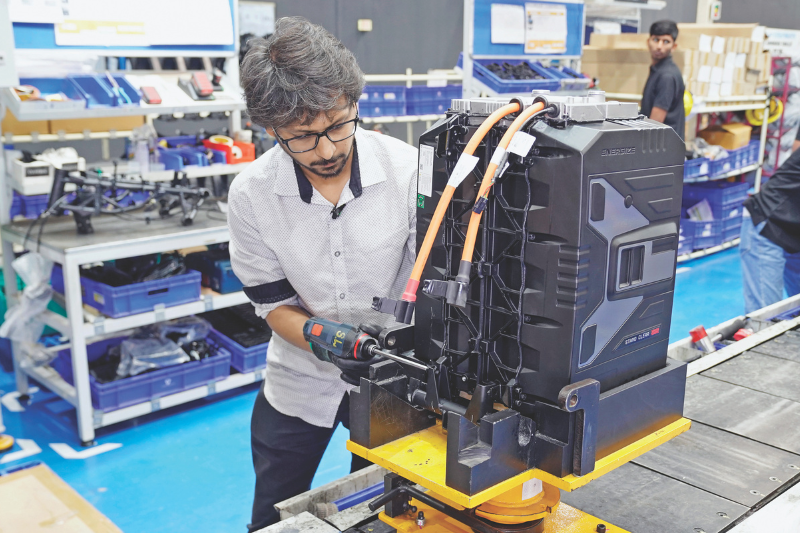
During our visit to Ultraviolette’s factory, we not only got a peek into how the X-47 crossover is built, but also into the technology involved. The icing on the cake came in the form of a hands-on experience of assembling the motorcycles
Story: Salman Bargir
Photography: Sanjay Raikar
I am not a fan of electric vehicles and personally feel that there are only a few that are good or make sense. I was aware of Ultraviolette’s credibility, but I had also heard that factory visits generally tend to be boring. Not in this case, though. When I got to know that we might get to assemble the X-47, there was heightened interest.
Before we were escorted to the assembly area, having first been told about the dos and don’ts, we were apprised of the substantial effort that had gone into the engineering of the motorcycles, which draw aspects from aerospace engineering. These include some in-house designed, some patented, and some industry-first technologies, including the radar system, battery, motor, motor controller unit, vehicle control unit, onboard charger, and more.
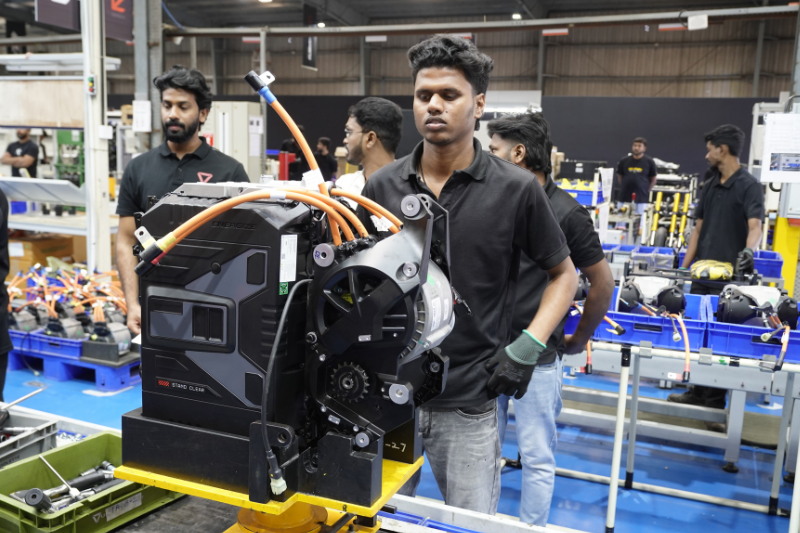
The process of building the motorcycle starts with the sorting of the cells. To eliminate any margin of error, each and every cell is tested before it goes into the battery packs. The packs are not only among the largest on any two-wheeler in India, but are also “10C” rated, that is, the rate of discharge in relation to the capacity of the battery. A higher “C” number means it pushes out power at a faster rate and stays cooler than those rated lower.
Typically, in electric two-wheelers that are equipped with lower C-rated batteries, heat is dissipated from the lateral surface of the battery pack through radial cooling. Ultraviolette employs axial cooling, a more effective technique wherein heat from the battery is dissipated from the top and bottom.
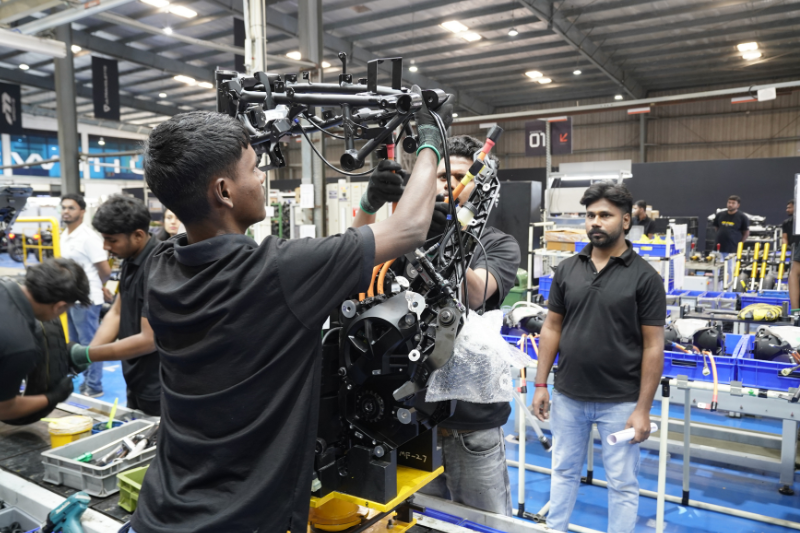
This is further supplemented by a central vehicle intelligence system that coordinates with all vehicle systems with aerospace-level redundancy. Along with protecting and enabling other functions of the motorcycle, it aids in mitigating battery degradation to enhance longevity.
The battery packs are incorporated with globally patented aluminium Printed Circuit Board Assemblies (PCBAs), a result of three years of rigorous engineering and experimentation. The single sheet, made of varying materials layered methodically, is responsible for electrical insulation, thermal conduction and has a cell-level fuse. In the event of one failing, the other cells will still continue to function normally. Each battery pack contains four modules with two such thin sheets on each side. Delicate, but a very important slice of life for the battery pack.
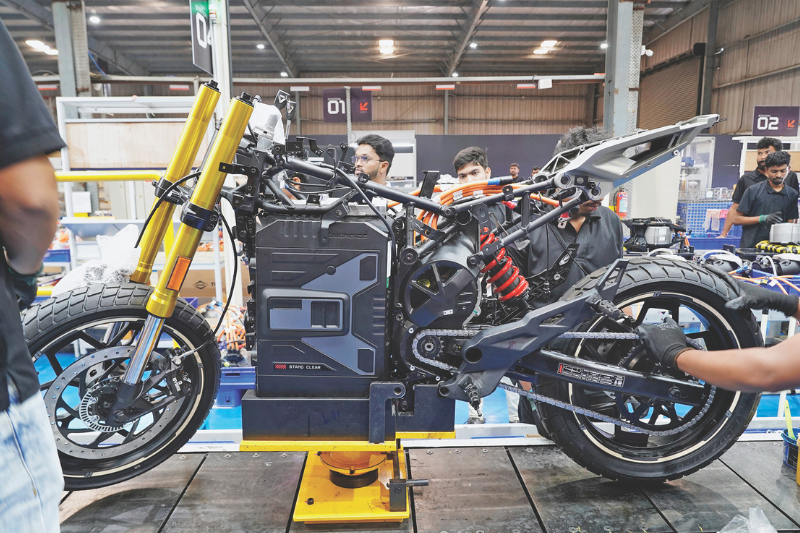
Another very important component of the X-47 is the onboard charger. Ultraviolette says the 1.6-kW onboard charger is also the world’s most power-dense air-cooled unit on two-wheelers. It is engineered to work optimally in all situations and conditions, and, with the capability of parallel charging, it further enables shorter charging durations.
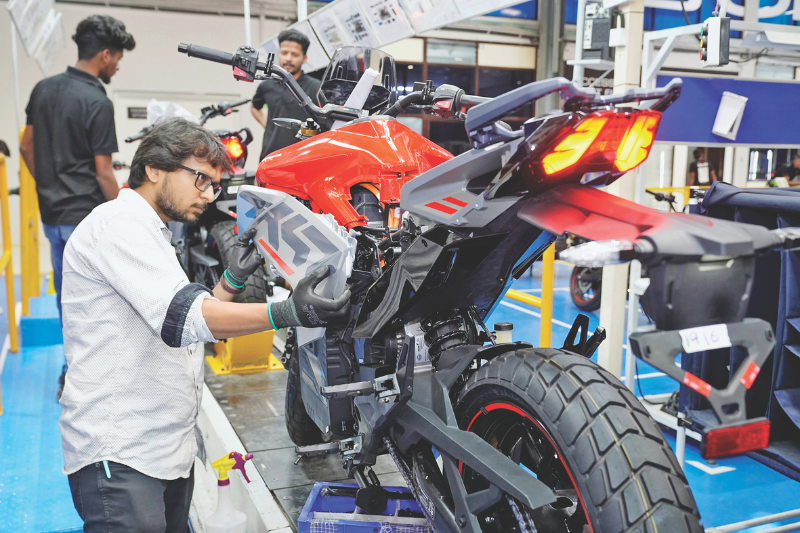
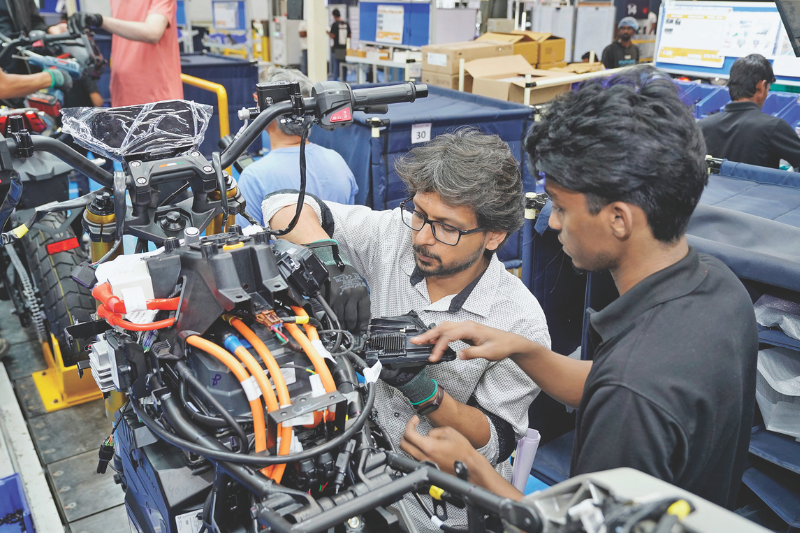
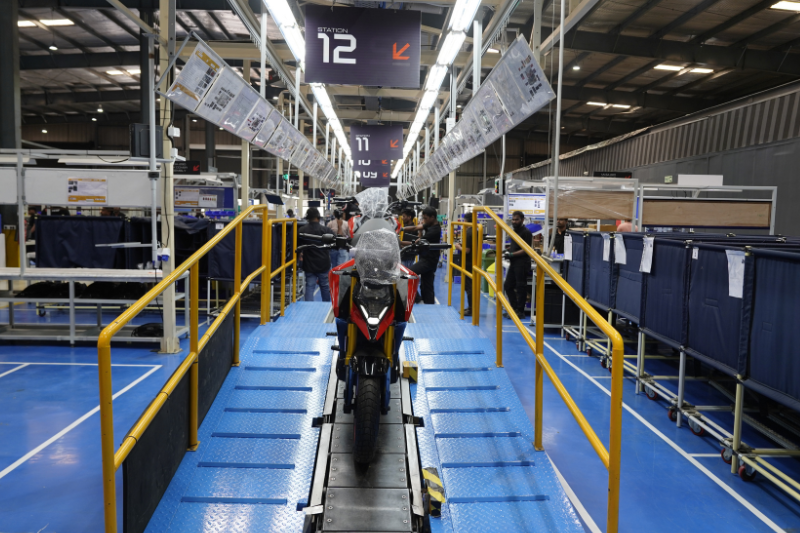
We were spread across the assembly line in a way that by the end of the experience, we would have experienced working on all possible stations. The battery line is in a separate enclosed chamber, wherein batteries are assembled with a lot of care before undergoing final checks. From here, the battery packs are moved to the start of the main assembly line. Yes, at Ultraviolette, the battery is the first component on the line.
The battery is not only the heart and soul of the vehicle, but the basis of existence. It and the 30-kW interior permanent magnet (IPM) motor are used as stressed members of the nearly seven-kilogram lightweight frame. All the various assemblies come together around them.
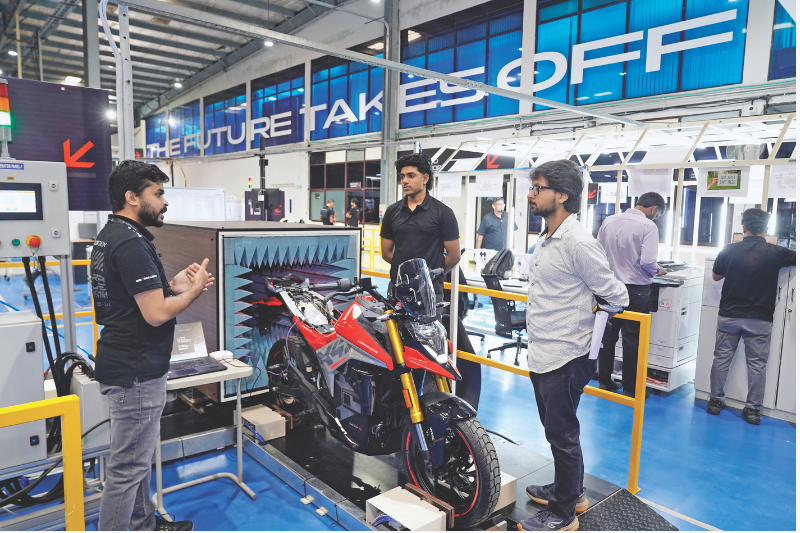
After the primary inspection, the vehicle is taken from the main line to the dyno testing station. And from there, the X-47 heads to one of its most important stations: radar system calibration. Here, the radar is precisely calibrated in an anechoic chamber housing a metal plate that reflects the waves. Moving ahead, it reaches the final inspection station after which it is ready to be dispatched.
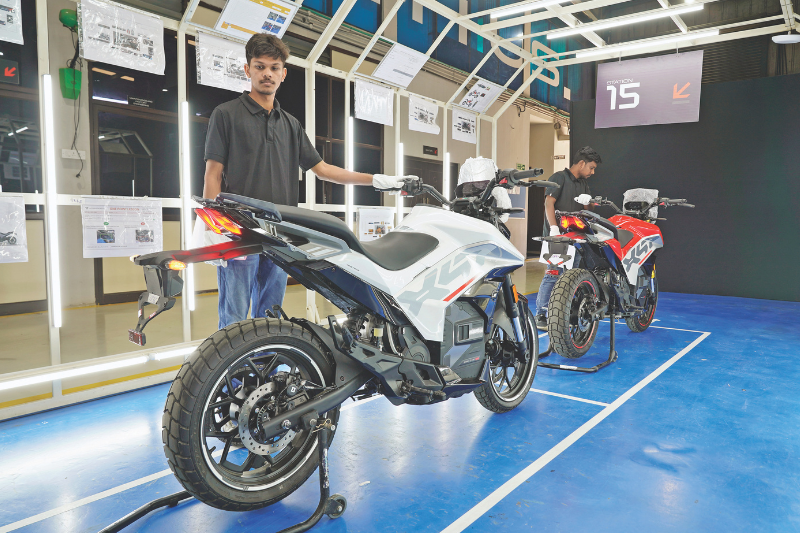
The visit was memorable indeed. Aerospace principles are applied not only in design but also in engineering. All this allows Ultraviolette to offer the optional eight-year/8,00,000-kilometre warranty on the battery and drivetrain and also answers one of my long-standing questions: how an EV (Harish Surampade’s Ultraviolette F77) that had clocked more than 1,00,000 km on the odometer could lose only four per cent battery health.
After witnessing and understanding what goes into building an Ultraviolette, I would not mind, nay, in fact, would like to try and use the X-47 crossover as my daily or even weekend ride and see how it performs here. Perhaps one of those that I helped assemble.