
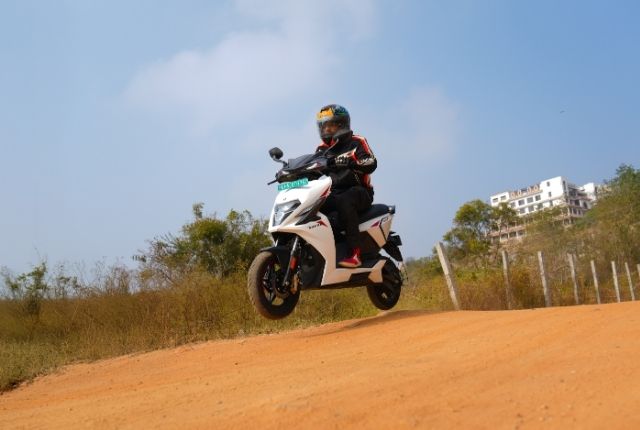
The Simple One Gen 2 is undoubtedly the most ‘unminimalistic’ scooter we have ridden in ages. And we liked it!
Story: Anvay Mahajan
Photography: Siddharth Dadhe
Minimalism is the global design obsession today. Brands across industries are chasing the Apple–Tesla philosophy, sanding away character in favour of clean lines and standardization. It almost feels like chaos is being engineered out of our lives. And then comes Simple Energy, doing exactly the opposite with the new Simple One Gen 2. Despite its name, there’s nothing “simple” about this scooter. Especially when it comes to design, tech, and many other things.
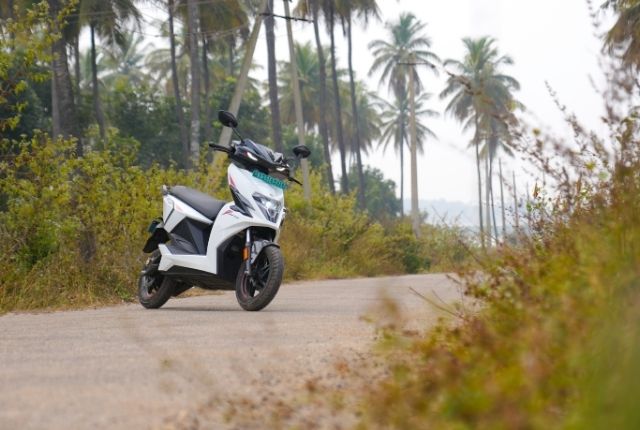
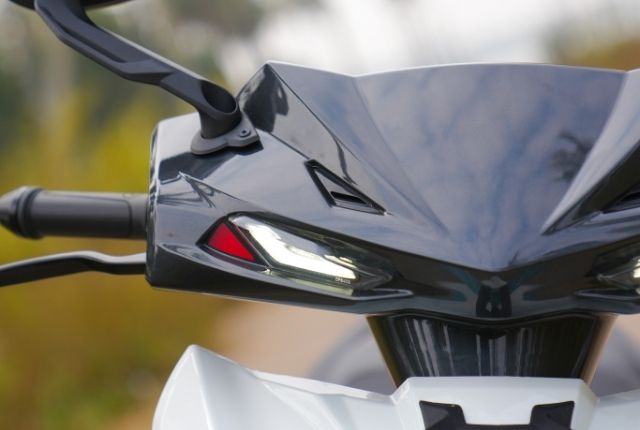
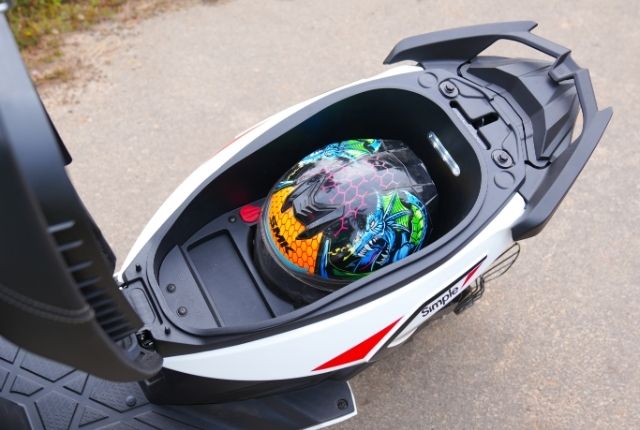
Let’s start with the design. The scooter is clearly youth-focused, sharp, and packed with aerodynamic elements. Ducts, vents, and flowing curves dominate the bodywork, giving the impression that someone like Adrian Newey had a say in the process. Highlights include vents designed to cool the instrument console and an apron-mounted air duct that adds both visual drama and aerodynamic intent. Build quality is impressive, with no cheap-looking plastics or noticeable panel gaps anywhere. That said, the toggle switches require a firm press to operate, which feels slightly out of character in an otherwise well-finished scooter. More on that later. Practicality hasn’t been overlooked either. The 35-litre underseat storage is generously sized and easily accommodates a half-face helmet. A small full-face helmet may fit, but anything larger prevents the seat from latching properly.
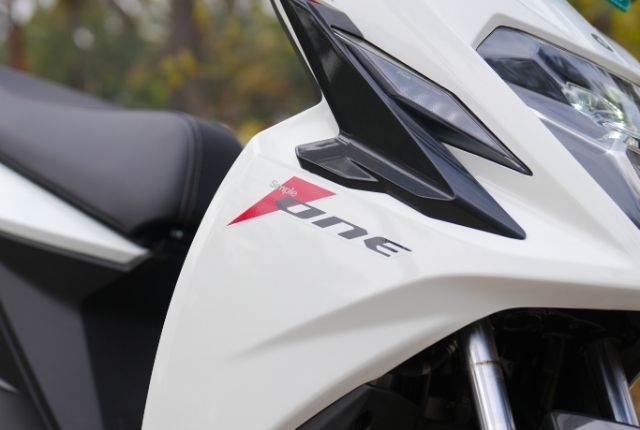
The Simple One Gen 2 is offered in three variants. The entry-level Simple OneS comes with a 3.7-kWh battery pack and does without a touchscreen. Sitting above it are the 4.5-kWh and five-kWh variants, both of which feature a touchscreen interface. We got our riding time on the five-kWh version. Above all these sits the Simple Ultra, which packs a massive 6.5-kWh battery. Essentially, it is the five-kWh scooter with an additional 1.5-kWh battery, resulting in a claimed IDC range of an astonishing 400 kilometres.
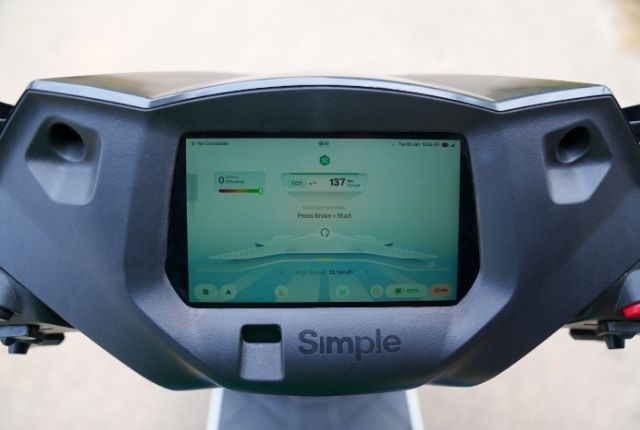
The Simple features a seven-inch touchscreen, referred to as the Human Machine Interface (HMI), running on the Simple OS. It offers functions such as navigation, music control, notifications, and call alerts, among others. While the interface is feature-rich, the touchscreen response is slightly sluggish and the display could have been brighter, something that may improve with future updates. Navigation, in particular, struggles to keep up when the scooter is ridden at higher speeds.
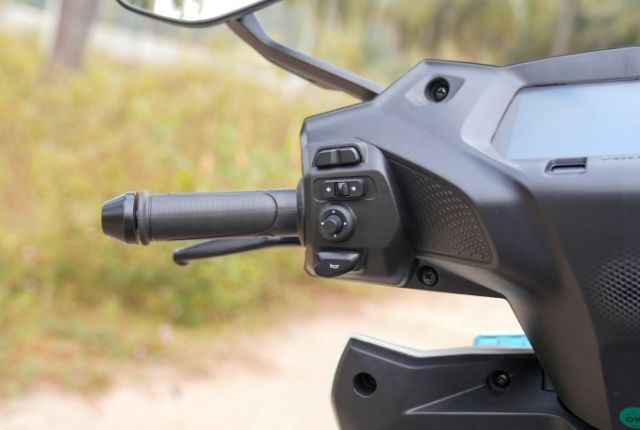
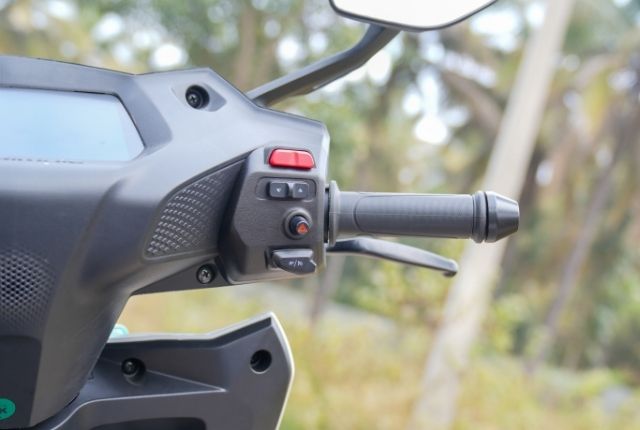
The switchgear layout adds to the learning curve. On the right side, a single toggle switch is tasked with three functions: cruise control, reverse mode, and live location sharing, which can be confusing. The switches also require a firm press, making seamless operation difficult even when you know what each control does. On the left, another toggle is placed between the indicator and horn switches, leading to frequent accidental inputs. These toggles are meant to control music, traction control, and regenerative braking when the touchscreen is disabled on the move. However, once Bluetooth is connected, the toggles are limited to music control alone, restricting access to ride-related functions.
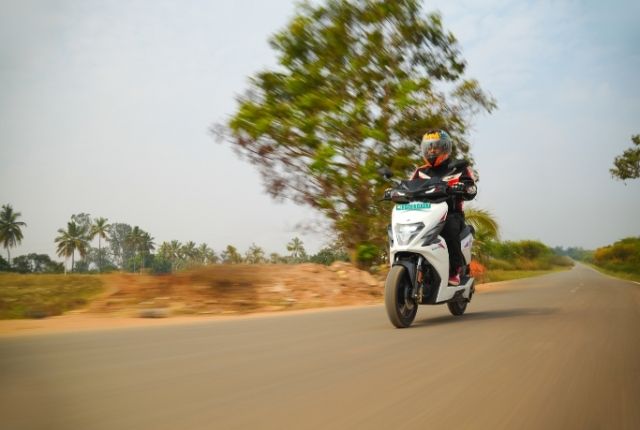
That said, the five-kWh variant is powered by an 8.8-kW motor, offering a top speed of 115 km/h and a brisk 0–40 km/h sprint in just 2.55 seconds. The motor feels genuinely strong and engaging, making the scooter great fun to ride. However, this is where things start to get less “simple”. The scooter offers six riding modes—EcoX, Eco, Ride, Air, Sonic, and SonicX—paired with four traction control settings (Road, Rain, Track, and Rally) and four levels of regenerative braking. This results into as many as 96 possible combinations.
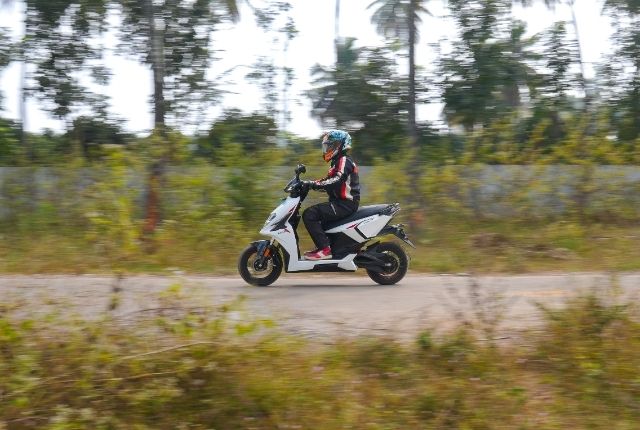
While the depth of customization is impressive, having six ride modes feels excessive, and quickly toggling among them takes time. Sonic and SonicX are easily the most entertaining modes, with the scooter hitting 110 km/h during our ride. I was not able to really make out the difference between the Ride and Air modes. EcoX is a machine-learning-based mode that adapts to riding behaviour to maximize range. The five-kWh battery is floor-mounted, and Simple claims an IDC range of 265 km. We couldn’t verify this during our short ride, so a longer test will be needed for a clearer picture.
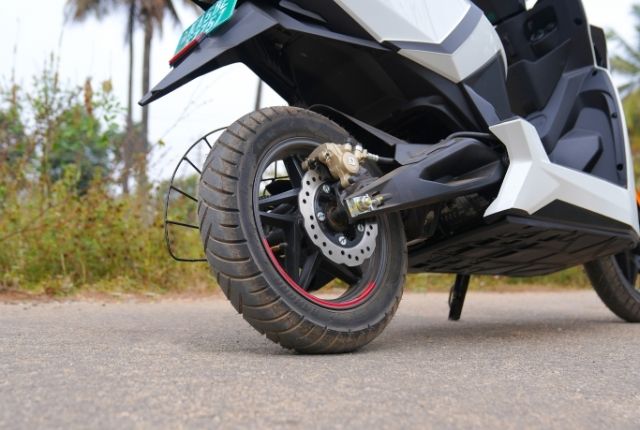
The ride quality feels excellent. The suspension setup is slightly soft. Combined with the new chassis, a lighter battery pack, and a lower seat height, the scooter feels planted, confidence-inspiring, and easy to manoeuvre, whether on open roads, in city traffic or on rough surfaces. The four traction control settings were another highlight, especially the Rally mode. We tried it on a short off-road section and were pleasantly surprised by the added grip and stability, even managing a few small jumps without drama.
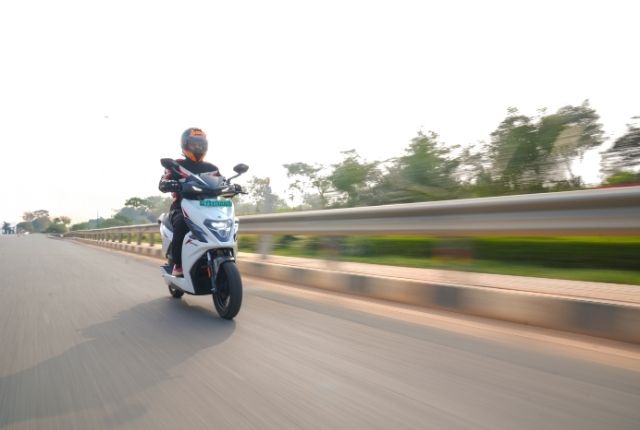
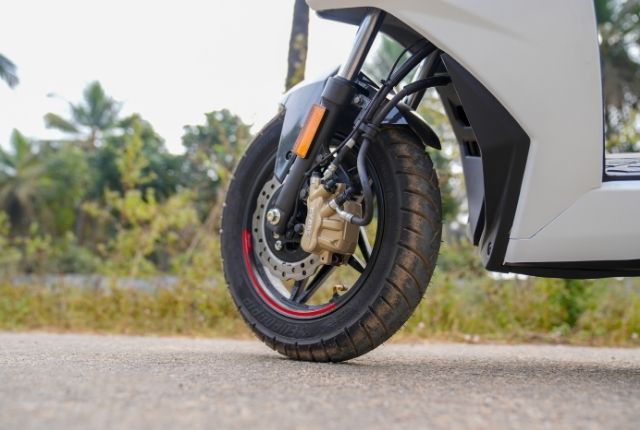
Braking duties are handled by disc brakes at both ends, which feel adequate with no cause of complaints. Regenerative braking, however, deserves special mention. There are four levels on offer, and at the highest setting the deceleration is extremely aggressive, almost to the point of being irksome on open roads. We experienced this first-hand. How effective it is in real-world conditions will become clear during a longer road test. The 12-inch alloys shod with Eurogrip tyres offer confidence-inspiring grip in corners and on rough patches.
Finally, let’s talk about the price. The Simple Ultra is yet to be launched. The Simple OneS starts at an introductory price of Rs 1.40 lakh, after which the price will increase by Rs 10,000. The 4.5-kWh variant is priced at Rs 1.70 lakh, while the five-kWh version costs Rs 1.78 lakh (all prices ex-showroom). For context, the 5.3-kWh TVS iQube ST undercuts it by about Rs 15,000. Now, this is a pretty big gap and the public might just lean towards a trusted brand. Note, though, that the iQube has a far more sober design, something that may not appeal to a Gen Z buyer like me.
The standard warranty stands at three years or 30,000 km, but Simple also offers three extended options: five years/50,000 km, eight years/80,000 km, and an industry-first lifetime warranty on the battery and motor. The lifetime option is a bold move, though it is likely to come with detailed terms, RC requirements, and an estimated additional cost of Rs 33,000. This is a pretty high premium, as a new battery might be similar in price.
Overall, Simple seems to have overcomplicated things. And there are a few things that feel gimmicky or unnecessary solutions for made-up problems such as the “incognito” mode. The ride quality is excellent, the build quality is impressive, and the design is striking, but the sheer number of choices makes on feel like sitting for an MBA entrance examination.


Leave a Reply