The Royal Enfield Himalayan Spirit is the best programme to train yourself if you plan a ride to the mighty Himalayas
Story: Anvay Mahajan
Photography: Royal Enfield
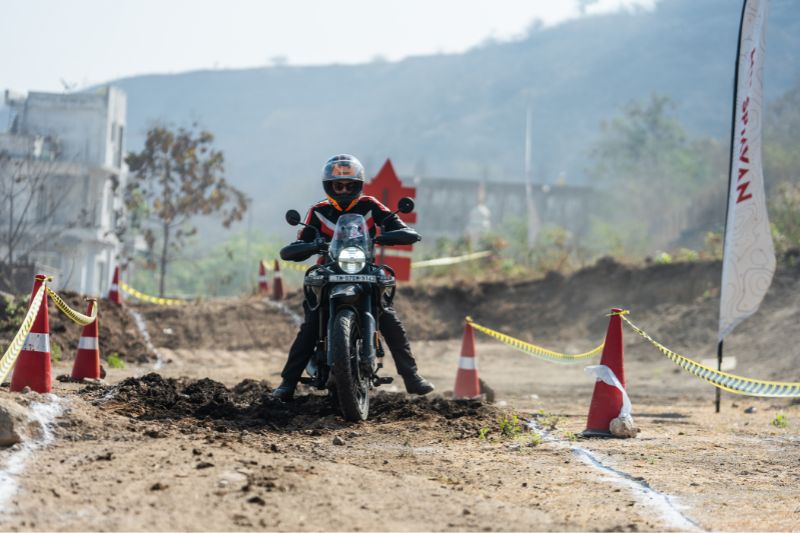
With the Leh–Ladakh riding season approaching, many enthusiasts begin planning their dream expedition to Leh, Spiti, and Zanskar. But the Himalayas are not a place to take lightly. The region’s remote landscapes, unpredictable surfaces, and physically demanding routes mean riders must be both mentally and technically prepared. To help Royal Enfield Himalayan riders build these skills, Royal Enfield organised the Himalayan Spirit experience programme at Autologue Ranch, Pune, where participants could get a taste of off-road riding, technical obstacles, and navigation challenges similar to those encountered during a Himalayan expedition.
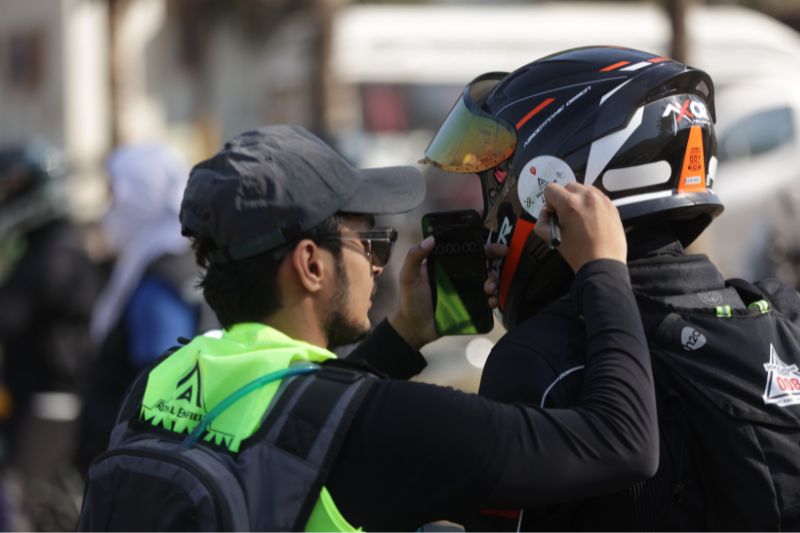
The day began with registration. Once the paperwork was complete, riders were handed a kit that included a map, checkpoint stickers, and a vehicle number. My motorcycle for the day was the Royal Enfield Himalayan 450 Mana Black. After a quick round of refreshments, all participants gathered for a briefing that explained the day’s structure.
Check out our short introduction to the Himalayan Spirit 2026:
The riding experience was divided into four sections: one obstacle course, a timed off-road lap, a team event, and a navigation trail. The navigation section was particularly interesting. Riders were required to follow a map with very basic instructions such as “turn left after 1.6 km”, or landmarks such as a bridge or a village. It was meant to replicate the kind of navigation challenges riders might face in remote Himalayan regions where signboards and mobile connectivity are rare.
The Himalayan 450 I was riding was a few months old, which meant it still had the earlier protruding version of the side-stand. Considering that the bike was parked on a slight incline, lifting it upright required some effort. After a couple of attempts, I managed to get it off the stand and was ready to go. This was also my first proper attempt at riding the Himalayan off road, so I was both excited and slightly nervous.
I began with the obstacle course. This section included a variety of challenges such as hill climbs, descents, piles of old tyres, boulders, and stretches of loose sand. Each obstacle was designed to simulate situations riders might encounter in the mountainous region of the Himalayas. The sand section proved particularly tricky. While negotiating a turn, I instinctively applied the front brake and promptly lost balance, resulting in my first fall of the day. Thankfully, there were no injuries, and I was able to complete the course.
After a short water break, it was time for the navigation trail. Our ride leader selected the Lean Bridge trail, which covered roughly 30 kilometres. The trail started on a hard, uneven surface with plenty of bumps. This was where I began to appreciate the suspension set-up of the Himalayan 450. Despite riding over a constant stream of bumps, the bike absorbed the impacts well, preventing fatigue from setting in too quickly.
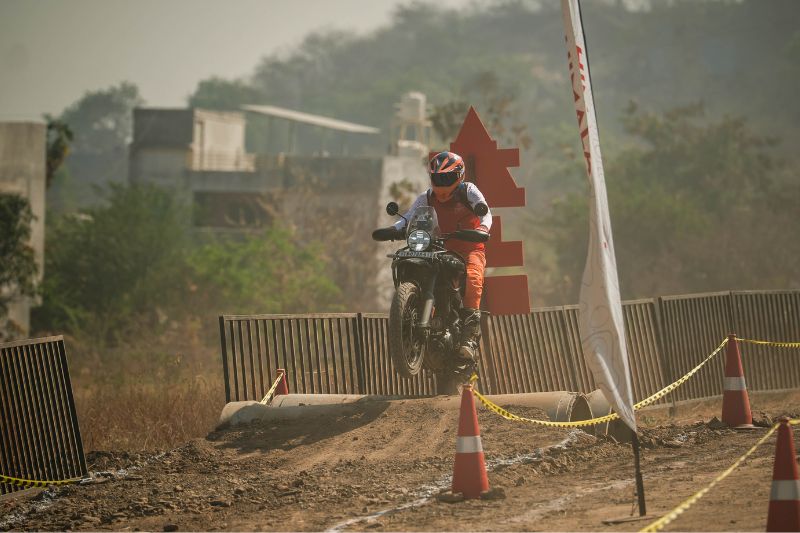
As we progressed further, the terrain changed dramatically. The surface became softer and sandier. Unfortunately, my earlier lesson hadn’t fully sunk in, and while taking a turn on the loose surface, I again applied the front brake too aggressively. The result was another fall. However, this time it served as a valuable learning moment. It reinforced the importance of controlled braking and smooth inputs while riding on loose terrain.
Eventually we reached the highlight—and, perhaps, the most intimidating part—of the trail: the Lean Bridge. The approach itself was nerve-racking. Riders had to descend a narrow path barely 1.5 metres wide, lined with trees on either side. At the bottom of the descent was a sharp right turn leading on to a narrow footbridge built over a flowing stream. A mistake here could mean either colliding with a tree or slipping into the water below.
By this point, the heat was starting to take its toll. As I descended towards the bridge, the pressure got to me and I forgot to apply the brakes properly before the turn. The wheels locked, and I suffered another fall. Fortunately, it was my last one of the day. After regaining composure, I carefully navigated the turn and successfully crossed the narrow bridge.
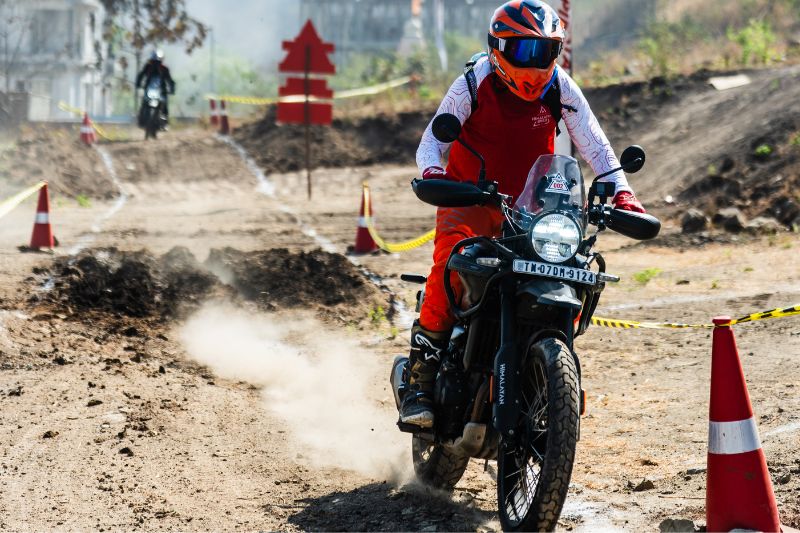
Beyond the bridge, the trail briefly returned to an off-road path before transforming into a paved road for around 10 kilometres. This stretch eventually led us to the final challenge: a long incline that stretched for roughly a kilometre and took around 20–25 minutes to climb. By the time we reached the top, the midday sun had become relentless. The heat was draining, and exhaustion had begun to creep in.
The summit marked the midpoint of the trail. After a quick break to hydrate ourselves, we began the return journey. At that stage, I remember thinking, “Why did I sign up for this? This ride is squeezing the life out of me.” But in hindsight, those thoughts were exactly the kind of mental battles riders must overcome during a Himalayan expedition.
The programme carries the tagline, “Mindset First. Mountain Next”, and that philosophy became clearer as the day progressed. The courses were intentionally designed to be demanding, reminding riders that anything can happen during a long-distance adventure ride. Staying alert, conserving energy, and maintaining focus are as important as technical riding skills.
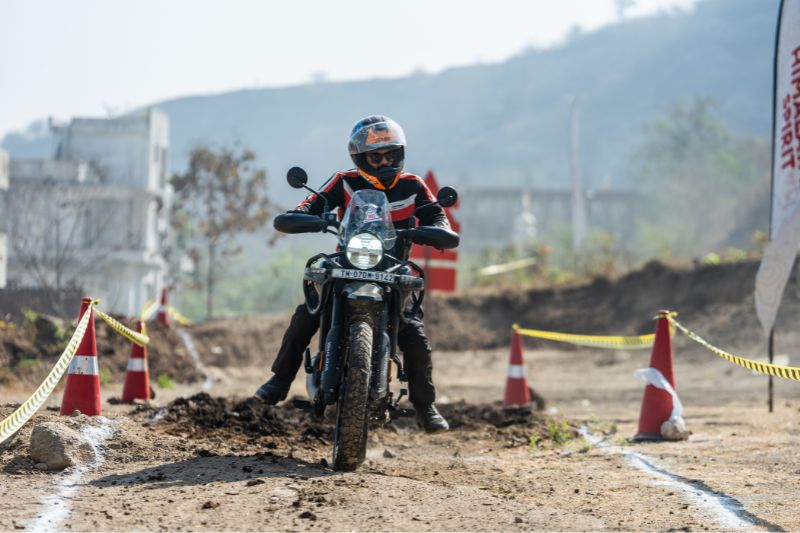
Our ride leader had told us earlier that the return leg would be the most enjoyable part of the day. He was right. The route back included a less technical off-road section followed by a stretch of open road. With the trail behind us, we were comfortably cruising at speeds of 80–90 km/h. The rush of wind at those speeds felt incredibly refreshing, almost as if it wiped away the fatigue built up through the day.
By the time we rolled back into Autologue Ranch, I was physically drained. A mild headache and sore muscles reminded me how demanding the ride had been. Yet, at the same time, I felt immensely satisfied. The experience had been challenging, educational, and incredibly rewarding.
Although the intense midday heat convinced me to skip the remaining courses that day, the experience left me eager for another attempt. Next time the Himalayan Spirit programme returns, I would happily sign up again. After all, if a Leh–Ladakh ride is the ultimate goal, this is exactly the kind of preparation every rider needs.