
The new Pulsars get one key mechanical change, along with a host of technical updates
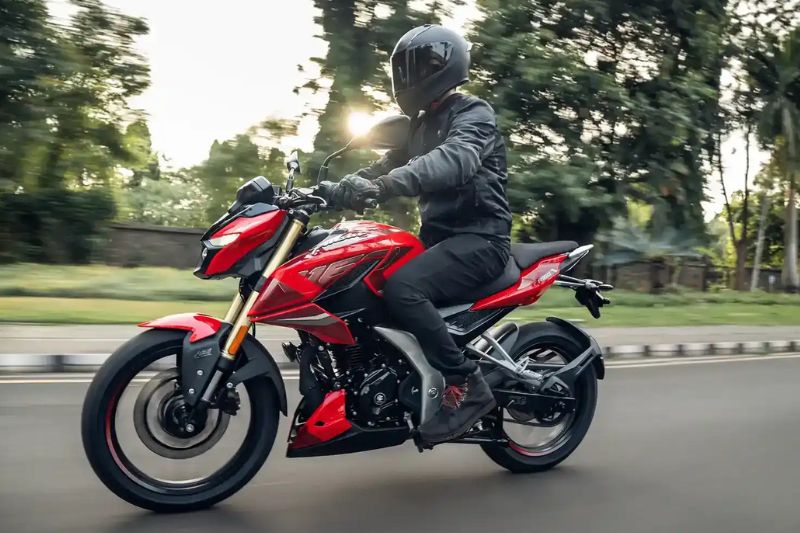
Bajaj has added a higher-spec variant line to the Pulsar N160, available in both single- as well as split-seat configurations. Prices for the updated Pulsar N160 start at Rs 1.24 lakh for the “Dual Channel Single Seat USD” variant, and go up to Rs 1.28 lakh for the “Dual Channel Split Seat USD” variant.
The first, and immediately visible, change is the inclusion of an upside-down fork, finished in gold, for a premium look. The next change comes in the form of a thoroughly revised tech suite. Now, the Pulsar N160 already had an LCD console with Bluetooth connectivity (via the Bajaj Ride Connect app), that displayed call and SMS alerts, and phone battery/signal indicators when it debuted back in 2022.
This same console has now been updated to include turn-by-turn navigation, call response/rejection, and ABS modes (Road, Rain, and Off-road), all of which can be modulated via the “Mode” button on the left hand switchgear. Keep in mind, though, that the revised electronics are available only on the top “Dual Channel Split Seat USD” variant.
Apart from this, however, the 2026 Pulsar N160 stays mechanically identical to its predecessor, with its 164.82-cc, air-cooled, single-cylinder engine making the same 16 hp and 14.65 Nm. The colourways on offer (Pearl Metallic White, Brooklyn Black, Racing Red, and Grey) are also the same across the model line-up.
The Pulsar N160 goes up chiefly against the Suzuki Gixxer 155 and TVS Apache RTR 160 4V. While the former is due for an update, the latter still has an advantage over the Pulsar, as though the top variant is significantly (up to Rs 10,000) costlier, it offers better performance figures from an overall lighter bike, along with niceties like adjustable clutch and brake levers.

Leave a Reply