
Goa’s sweltering heat did get to me but, astride the breezy BMW F 450 GS, it quickly faded into the background. More importantly, it set the tone for what this middleweight ADV is all about.
Story: Salman Bargir
Photography: Sanjay Raikar
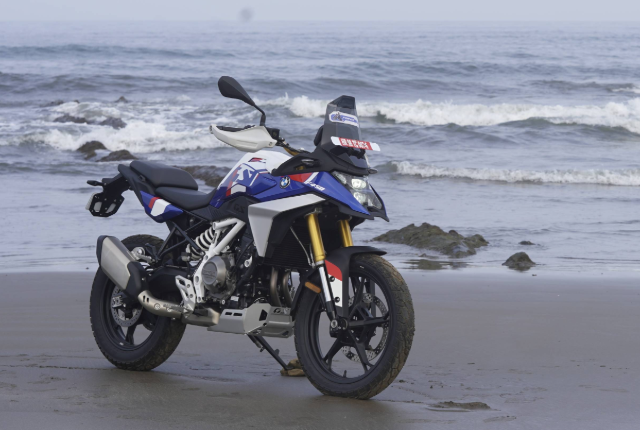
In one of the many conversations I had with my late father, I fondly remember him jokingly saying “BMW” means “Bahut Mehenga Wahan”, meaning “a very expensive vehicle”. I wonder what he would have to say about the India price of the all-new F 450 GS. Gauging from the response on social media, some still feel it is expensive. Well, to each their own. The question is, is it worth it?
I was enroute to ride it when I first saw it pass by. Noticing it out of the blue, in Racing Metallic Blue, across NH 66, piqued my curiosity to see it up close. And when I did, it looked every bit a GS, a scaled down version of its larger siblings.
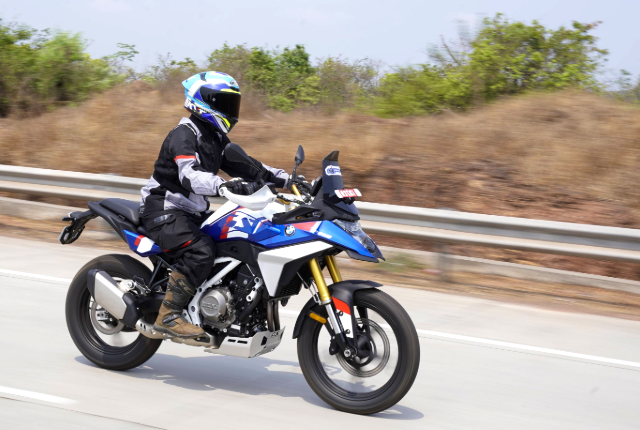
Jagged, striking and aggressive. The BMW F 450 GS makes a strong first impression. Up front, the signature X-shaped headlight sits above the high-mounted beak, below the BMW Roundel fang-like silver panels –what BMW calls “tooth” – add to its distinctive face.
From the side, the tank with GS decals and blue-red livery is flanked by pronounced shrouds that lend it a muscular stance. It then tapers into a slim waist at the rider’s seat before subtly bulging towards the rear, and finally narrowing again at the tail. Overall, the F 450 GS is defined by BMW’s signature flyline design language, a hallmark of the GS family for decades.
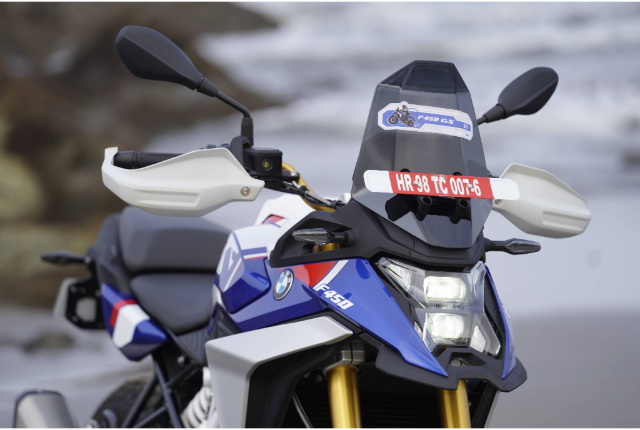
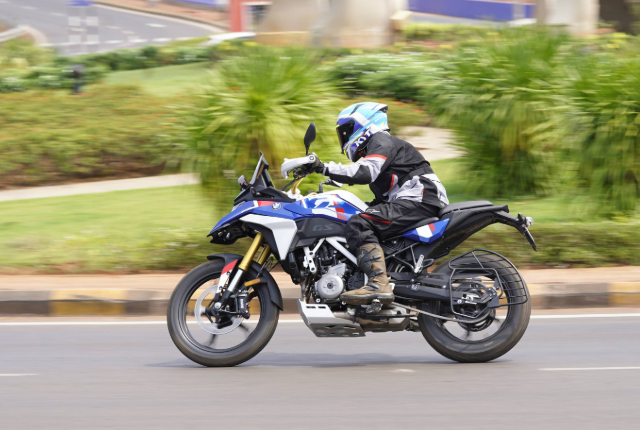
Excited to ride the motorcycle, I swung a leg over and lifted it off the side-stand, the lightness and ease were immediately apparent. Gripping the grippy heated grips, I thumbed the starter to bring the all-new parallel-twin to life. Slotting it into first gear, I gradually released the clutch lever, the motorcycle neither moved, nor stalled. The Easy Ride Clutch (ERC) had made its presence felt. A key highlight of the F 450 GS, this system uses an advanced centrifugal clutch that allows the bike to pull away from a standstill and come to a halt, in any gear, without stalling the engine.
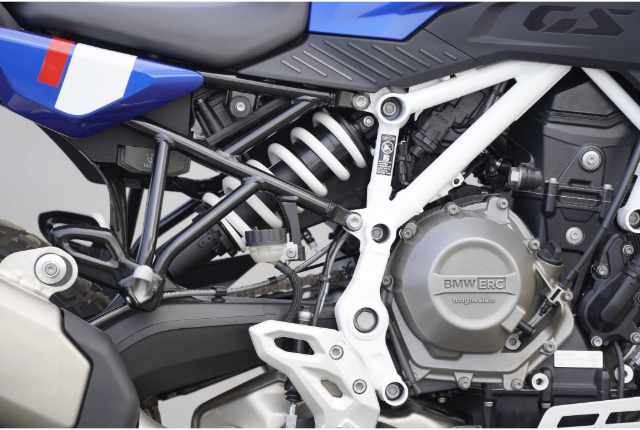
As a manual shifter by preference, I was reluctant but curious to try the ERC. There is a learning curve; as you open the throttle, the centrifugal weights slide outward to engage the plates, requiring you to reach roughly 2,800 rpm before the motorcycle begins to move. The experience mimics an automated scooter, yet you retain full control over the slick six-speed bi-directional quick shifter. The system is also calibrated to stay closed in overrun mode, meaning you don’t lose engine braking when decelerating or riding downhill.
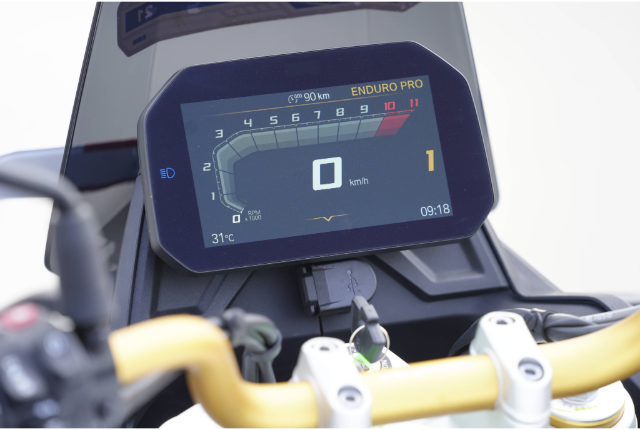
While the crisp R 1300 GS derived 6.5-inch TFT dash prompts timely shifts, ERC can launch the motorcycle from a standstill in sixth gear, though doing so causes extreme clutch slip. A costly mistake that, as another rider joked, “more money for BMW.”
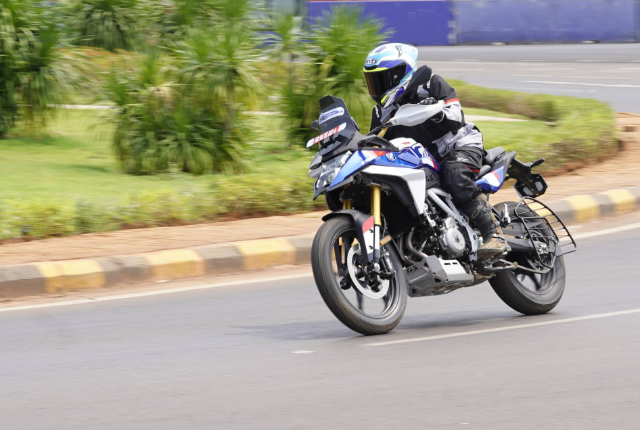
However, using the tool as intended makes it shine. Purists might miss the precision of a standard lever, but for inexperienced or “lazy” riders, it’s a boon. It aided in effortlessly handling the sections of stop-and-go congestion on Goa’s narrow village roads, and while making U-turns, it made this mid-sized GS feel more manageable than motorcycles that sit below its category.
What also helps is its relatively low weight of 178 kg. A hollow-cast aluminium swingarm and a magnesium-alloy-encased parallel-twin engine –used as a stressed member– aid mass centralisation, which in turn improves handling, agility and stability.
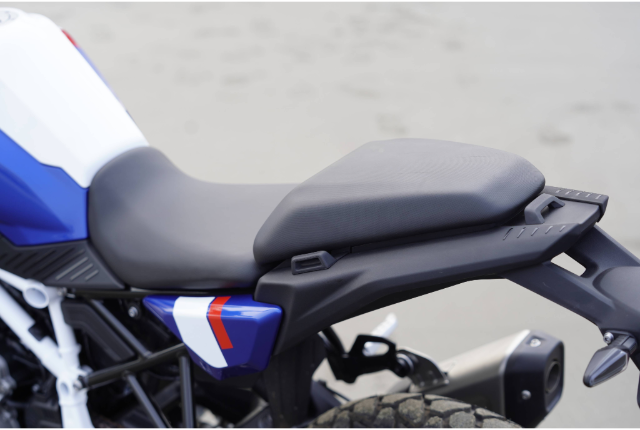
Surprisingly, the 845-mm seat height didn’t pose an issue, despite my relatively short stature. The step-up seat was comfortable over the course of my nearly 100-km ride, with the raised rear section offering useful lower back support. The contoured shape of the tank allowed good knee-grip and the footrest as well as handlebar position felt spot on, whether seated or stand-up riding.
Cruising through the villages of Anjuna, Assagao, and Siolim toward the highway, the dash indicated an impressive 3.3 litres/100 km (30.3 km/l). However, once I hit the open road and began pushing the motorcycle aggressively, that figure shifted to 4.4 litres/100 km (22.7 km/l). A respectable figure for a twin-cylinder machine capable of such spirited performance.
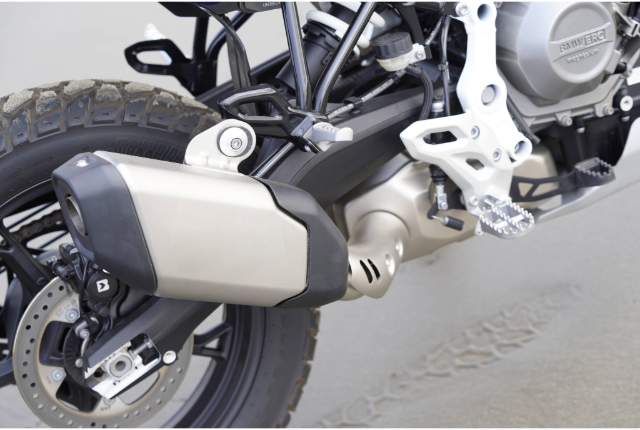
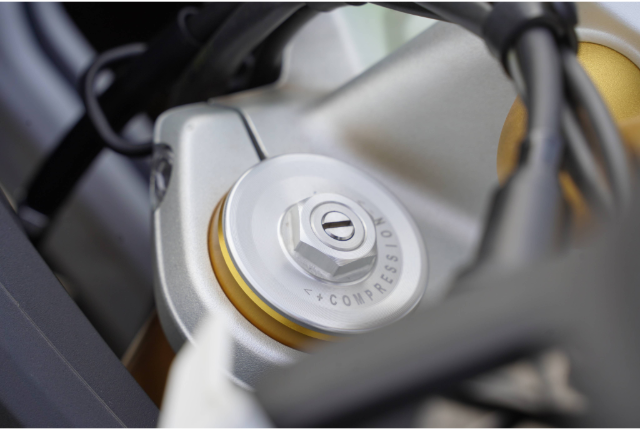
Engine refinement is very good. Vibrations are minimal, and are noticeable only when you actively look for them. While acceleration is not outright punchy, it is strong and linear. You can easily cruise all day in sixth gear around 120 km/h, making long-distance touring fatigue-free. While the adjustable front USD fork and rear monoshock suspension setup offer a pliant ride and keeps the motorcycle reassuringly planted, my only gripe for high-speed travel would be the wind protection; I’d certainly opt for the taller accessory windscreen over the standard “Enduro” screen for better deflection.
Among the other aspects I appreciate on the BMW F 450 GS is the braking setup. The front brake, well calibrated, offers a strong and precise bite, with lever feel building progressively and allowing for accurate modulation based on input. The rear brake pedal, while slightly woody in feel, delivers predictable and gradual stopping performance.
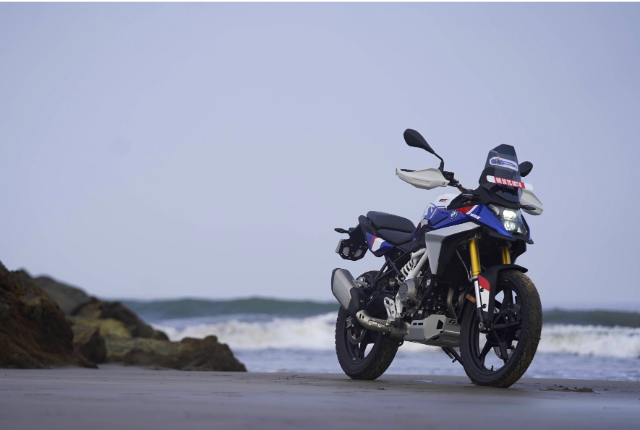
The dual-purpose Maxxis Maxplore tyres impressed with their grip across surfaces; tarmac, cement and even off-road sections. On the wet stretches of the beach, the tyres, aided by the sophisticated electronic rider aids, kept things composed and reassuringly under control.
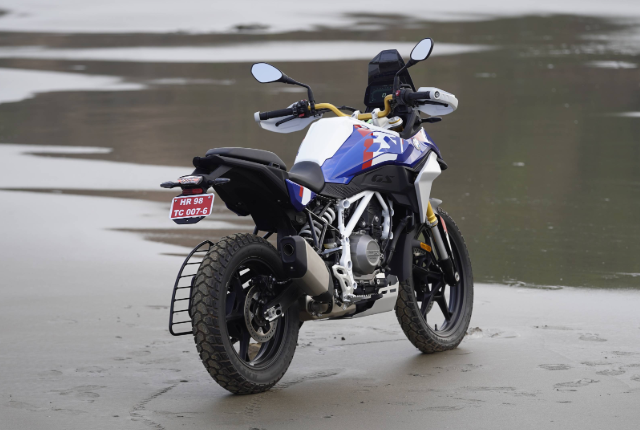
While the integrated tie-down brackets on the tail section are a thoughtful touch for minimalists, opting for the luggage carrier is a practical necessity. It doesn’t just expand touring capacity; it provides the pillion with much sturdier grab handles and acts as a vital leverage point when manhandling the bike out of tight spots or recovering it from tricky off-road situations.
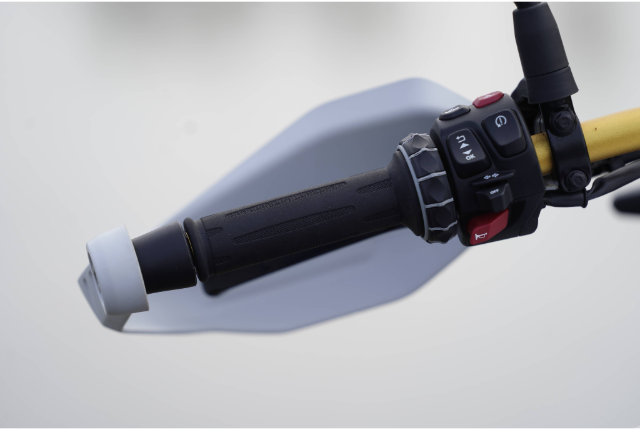
In conclusion, the all-new BMW F 450 GS, especially the top-spec GS trophy comes with a substantial list of features. Even the Base variant features heated grips, pre-load adjustment for the rear suspension as well as adjustable levers and brake pedal. It also gets electronic riding aids like lean sensing ABS and Traction Control, Dynamic Engine Brake Control and three ride modes courtesy the ride-by-wire system. Lastly, BMW’s famed multi-controller also makes its way onto the BMW F 450 GS as a standard feature. Intuitive to use, it allowed me to navigate the instrument cluster without needing to take my hands off the handlebar.
But, then, it isn’t only about the spec sheet. Riding the BMW F 450 GS through the villages of Goa made me forget the humidity, along with my sweat-drenched riding gear.
In a world overloaded with constant noise from social media and digital platforms, riding remains one of the few activities that brings genuine joy and calm. And with a motorcycle that is as unintimidating, effortless and engaging as the F 450 GS, that joy is amplified.
It also reminded me of something else my late father also said about BMW, “Bahut Mahan Wahan.”
Also Read: Getting Ready to be Leh’d
Leave a Reply