
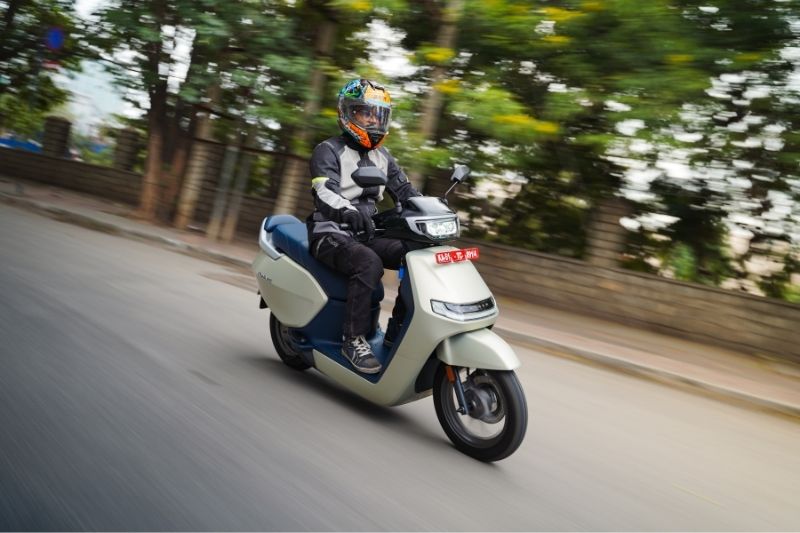
Ather’s new affordable family-focused scooter will be a big deal for the brand to make it a household name
Story – Anvay Mahajan
Photography – Chirayu Gijare
Time and time again, Ather has been told the same thing: its products are good, but they aren’t exactly family-focused, nor are they the most affordable. The Rizta did bring practicality to the table, but its design was a little unconventional. The 450 series, meanwhile, has always been the “sporty” option aimed at younger riders. What Ather was missing was a scooter that could appeal to pretty much everyone; something that looked sober, was comfortable to ride, and was affordable. And, more importantly, had metal panels, because apparently Indians still love the idea of a metal-bodied scooter.
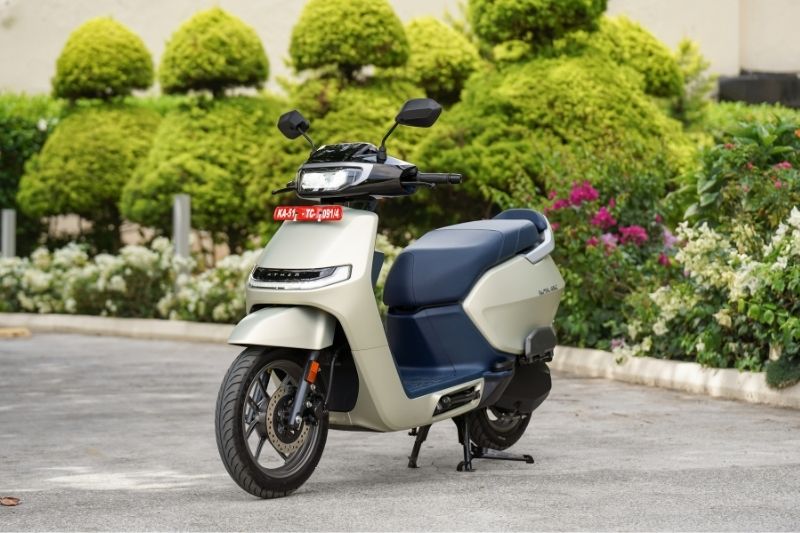
Enter the Konarc, Ather’s much-anticipated new scooter, unveiled at the Ather Community Day (ACD26). It is based on the EL platform that was showcased last year at ACD25 and is available in two variants, S Line and Z Line, with multiple battery options. For now, though, only the S Line has been launched, with three battery options. Ather also showcased the features of the Z Line at ACD26, but for the ride, we were given the S Line.
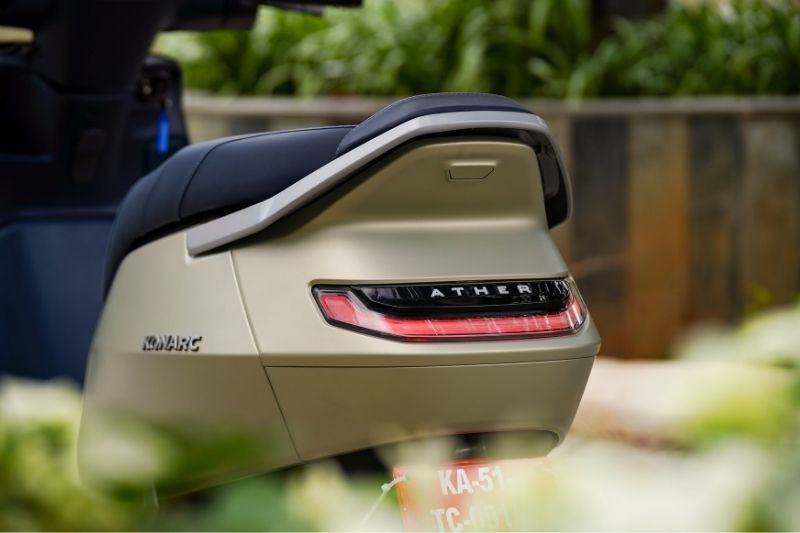
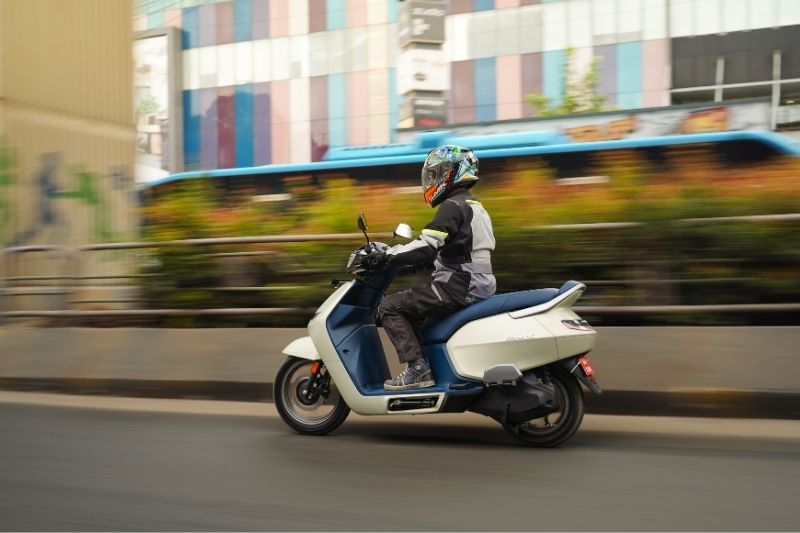
Design-wise, the Konarc looks like a certain petrol-powered scooter which, coincidentally, also comes from Bengaluru. It is simple and sober, and if you parked it among a bunch of other scooters, it could easily go unnoticed. The metal panels are limited to the sides. It gets a large 14-inch front wheel, a long 1,352-millimetre wheelbase, and a wide and comfortable seat. There is 31 litres of underseat storage along with a two-litre front compartment. Another neat feature is the 450-W onboard charger, which can be combined with Ather’s 450-W or 900-W portable chargers for a maximum total of 1,350-W faster charging. That’s actually a pretty smart solution.
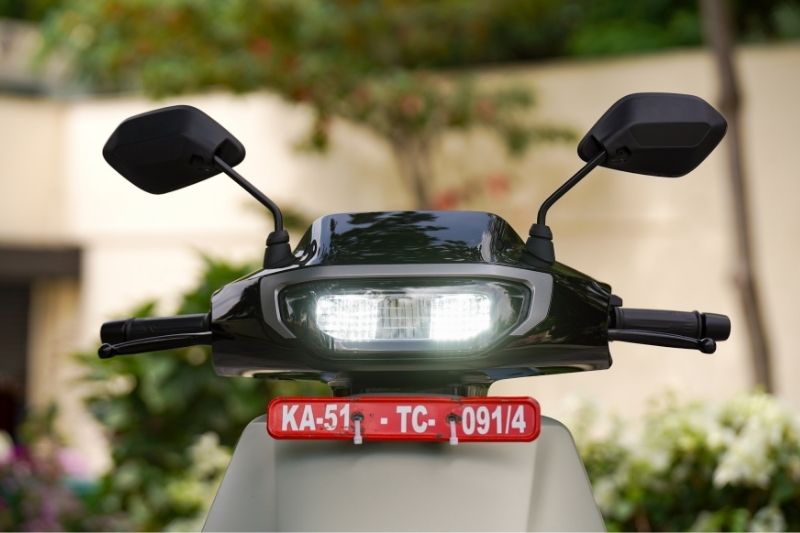
The Z Line, meanwhile, gets all the bells and whistles. There is a touchscreen display, a Magic Key fob with features such as AutoPop that lets you access the underseat storage using the fob or a button on the scooter, along with proximity keyless access. Ather has also thrown in a bunch of quirky features and accessories with equally quirky names, such as Loungeback, its extendable backrest. But most of these features aren’t available on the S Line, so it gets a good old mechanical key instead. Sigh.
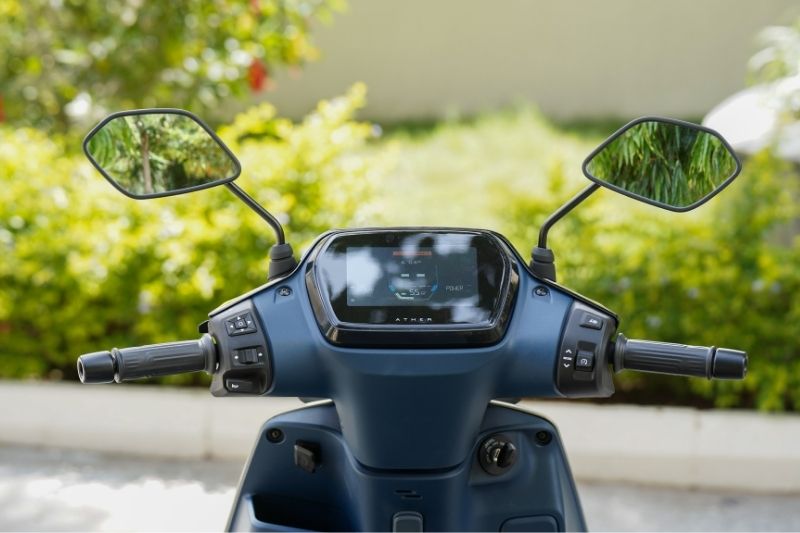
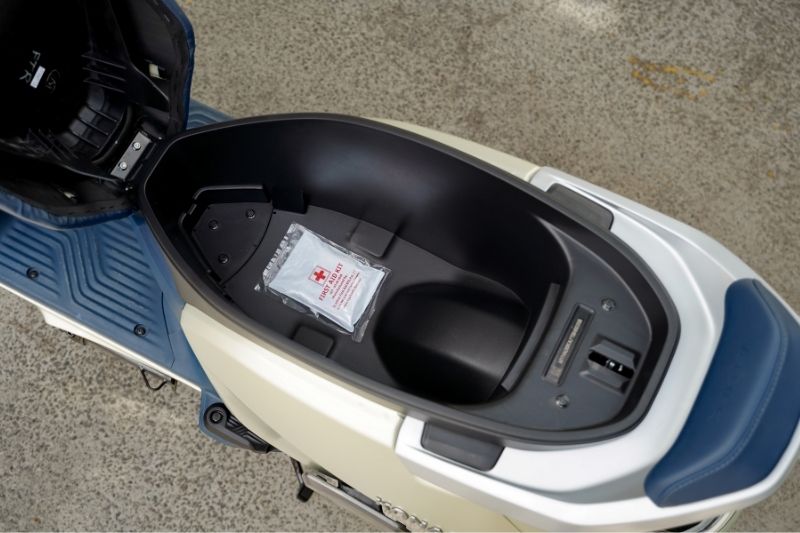
We only had about 30 minutes with the Konarc in Bengaluru traffic, so judging its riding dynamics based on such a short stint would be unfair. That said, the 4.7-kW motor in Power mode has enough punch to keep up with traffic, while SmartEco mode makes things considerably slower. The front fork gets 90 mm of travel and the rear monoshock gets 100 mm. The suspension feels balanced for typical city riding, while the 14-inch front wheel adds stability and helps smooth out some of the bad patches.
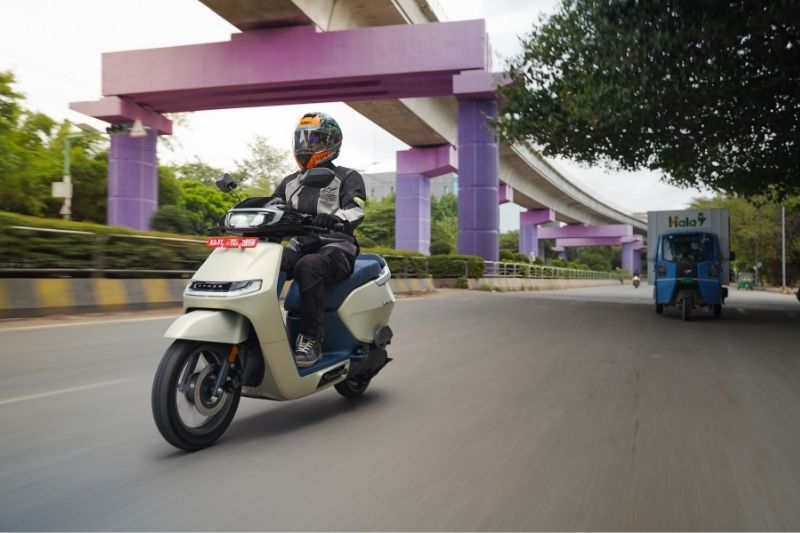
The front disc and rear drum brake set-up provides adequate stopping power. The Konarc is also the first scooter to get Ather’s AirWalk, essentially a parking assist system that helps you move the scooter around while parking. As someone who isn’t exactly the most confident when it comes to manoeuvring scooters in tight spaces, I quite like this feature. I no longer have to compress the fork, time the release, and awkwardly pull/push the scooter every time I need to park it.
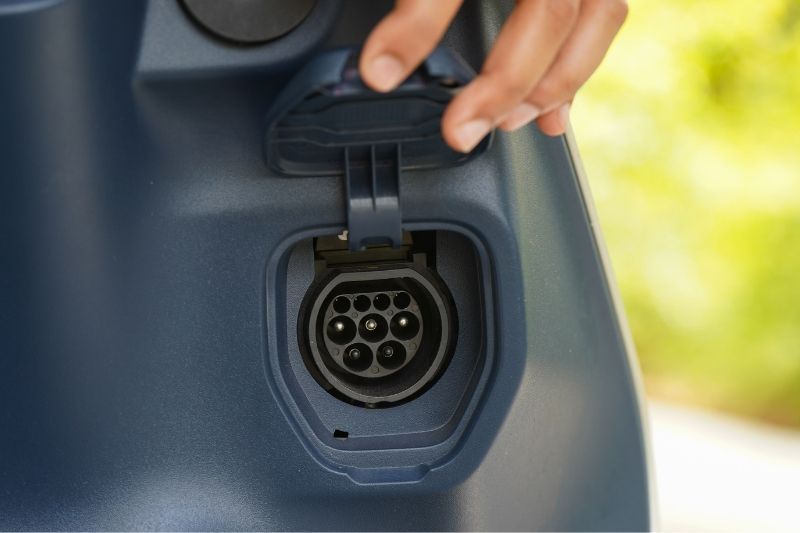
The Konarc is currently available with 2.1-kWh, 2.7-kWh, and 3.5-kWh battery packs. There is one larger pack option with a claimed range of about 200 kilometres, but it has not yet been launched. The one we rode was the 3.5-kWh option, which has a claimed IDC range of 161 km. At the start of our short ride, the scooter showed an indicated range of 56 km in Power mode. By the end, we had covered 13.4 km, mostly in Power mode, and the indicated range had dropped to 44 km. However, as observed earlier, our short stint with the scooter isn’t enough to arrive at any conclusions about its real-world range. Spending more time with it should give us a better idea.
Ather claims that the Konarc requires servicing only every 10,000 km. There is also a 10-year/one lakh-km warranty option for the battery pack. During the showcase, Ather demonstrated how easily the rear wheel unit can be removed for repair and maintenance, which should make things simpler when the scooter eventually needs attention.
The Ather Konarc starts at Rs 1 lakh (ex-showroom), although the entry-level version misses out on many of the Z Line’s features and gets drum brakes at both ends. The 3.5-kWh option we rode starts at Rs 1.45 lakh (ex-showroom). The Konarc will go up against scooters such as the TVS Orbiter and Chetak C25.
Ather may be a little late to this particular party, but the Konarc seems like a sensible addition to its portfolio. This scooter might be the one to make Ather mainstream and a household brand.

Leave a Reply