
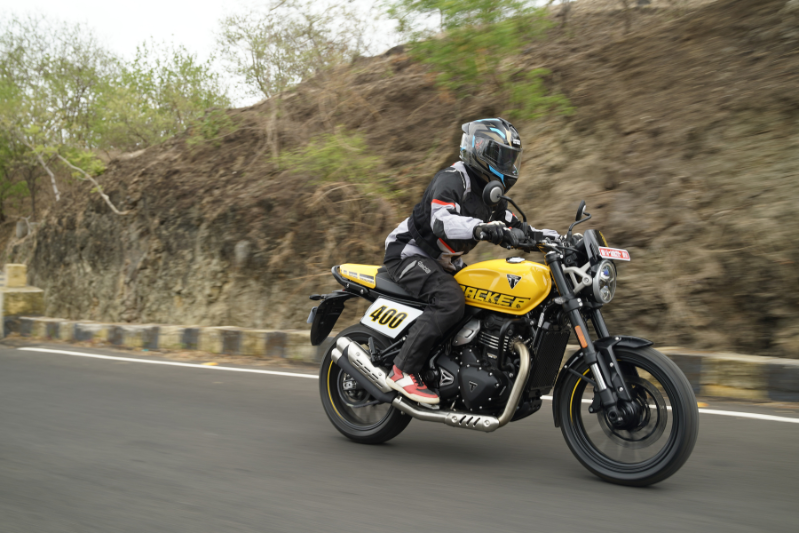
While the Tracker 400 occupies the middle ground in Triumph’s 400 line-up in terms of price, its performance credentials place it alongside the Thruxton 400. We took India’s first production street-tracker for a ride to find out what it is about.
Story: Salman Bargir
Photography: Sanjay Raikar
Velodrome bicycle pacing was the catalyst that had popularized motorcycle “board track” racing. Originally built for bicycle racing, wooden board tracks proved dangerous and increasingly expensive to construct and maintain.
Resultantly, race promoters and grassroots riders searched for an alternative. They found it in existing infrastructure: county fairgrounds and horse-racing tracks. Riders started racing their primitive motorcycles on these flat, oval dirt surfaces. With little grip, no banking and often no brakes, riders had to pitch their heavy bikes sideways, initiating high-speed power slides—the definitive hallmark of modern flat track riding. And that is how flat-track, one of the oldest forms of motorcycle racing, was born.
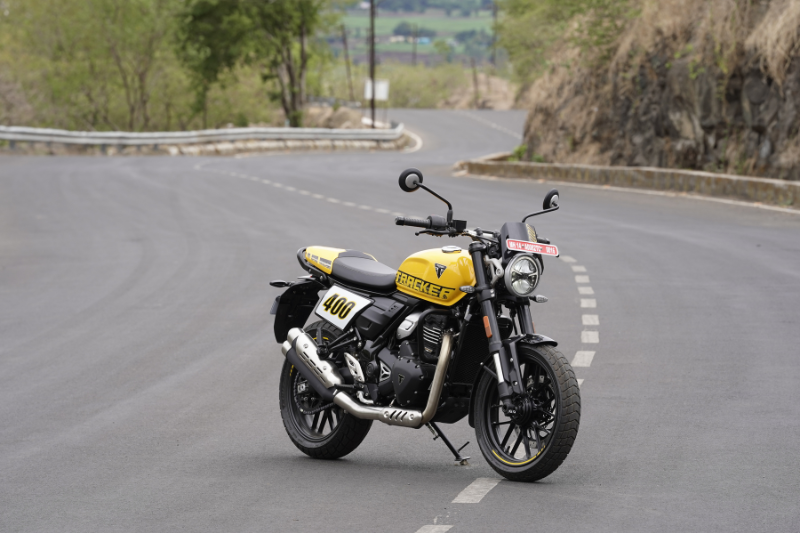
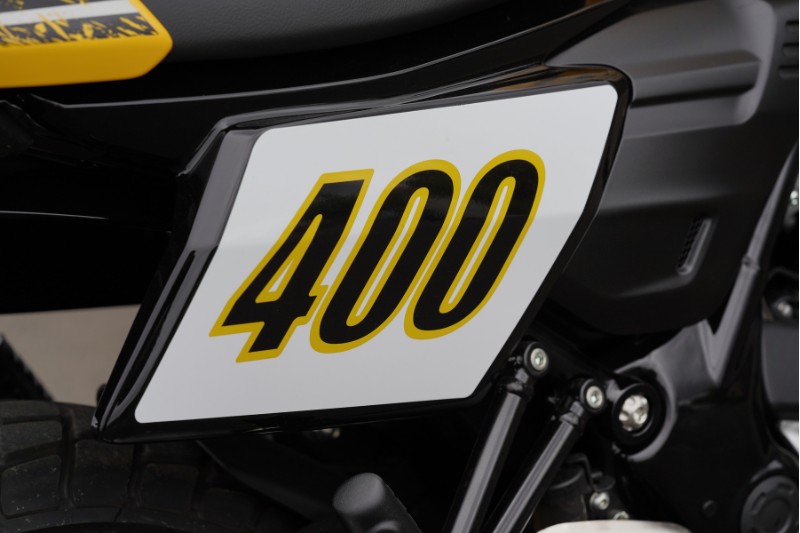
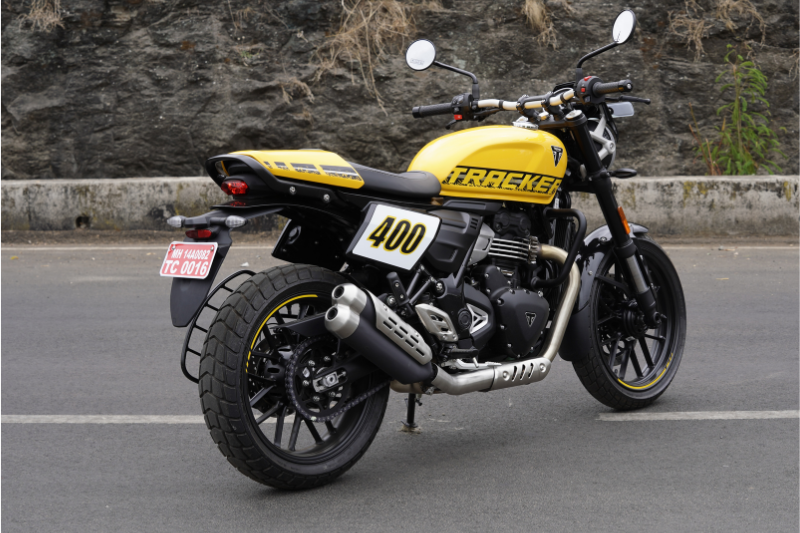
Triumph has a rich legacy in flat-track racing, and the Tracker 400 looks every bit an extension of it. At first glance, it resembles its 400 siblings, but then your eyes are drawn to the number board. A defining element of flat-track motorcycles, it instantly distinguishes the Tracker 400 from the rest of the range while giving it a unique presence on the road.
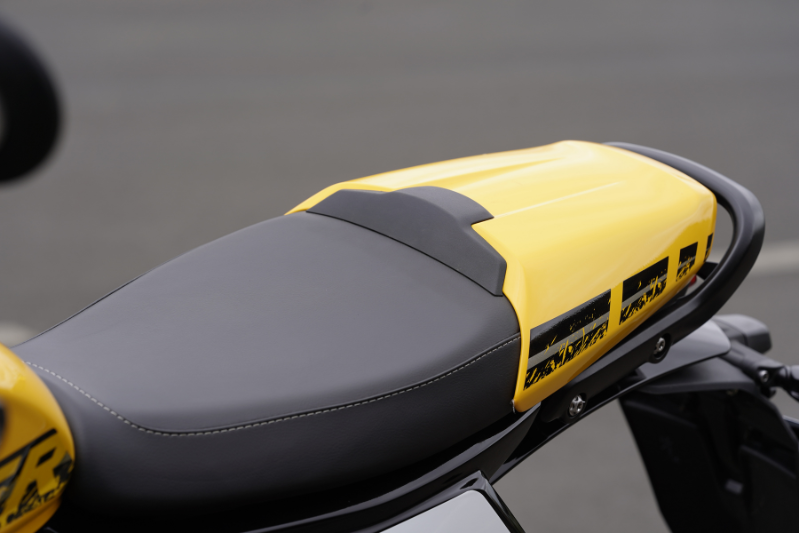
Another highlight is the wide, well-cushioned seat with its accessible 805 mm seat height, complemented by a colour-coded flat pillion cowl. It reinforces the motorcycle’s racing-inspired identity and, for me, serves as a subtle deterrent to unwanted pillion requests.
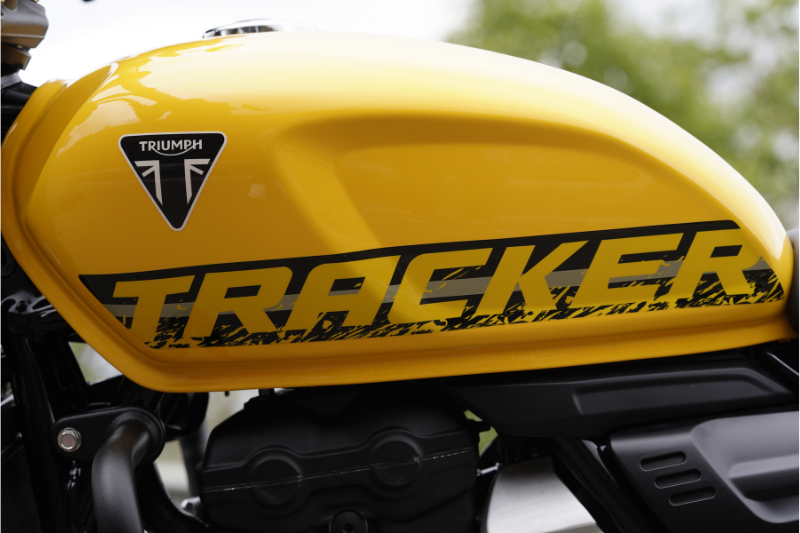
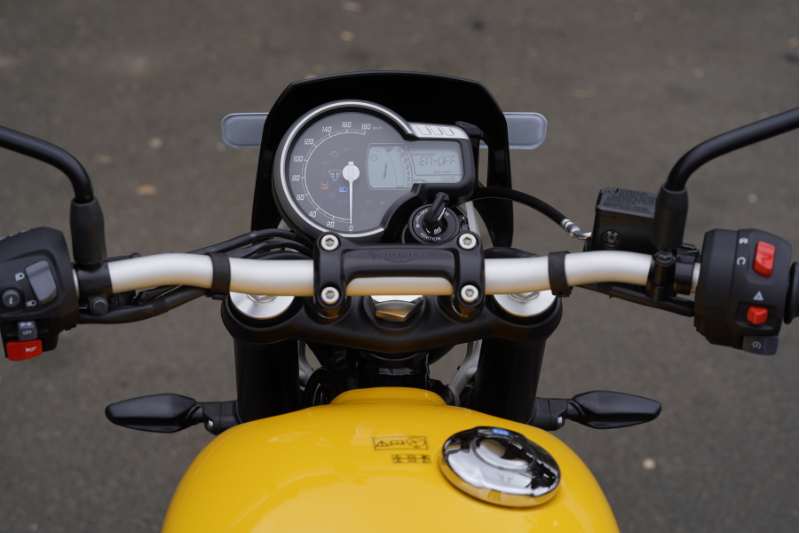
Although the 13-litre fuel tank appears familiar, it is flatter and wider, featuring deeper knee recesses that make it easier to grip. The aluminium hydroformed handlebar, similar to that of the Speed 400, is 23 mm wider and positioned 136 mm lower. Combined with relatively high and recessed footpegs, the resulting riding position feels aggressive, engaging and thoroughly enjoyable.
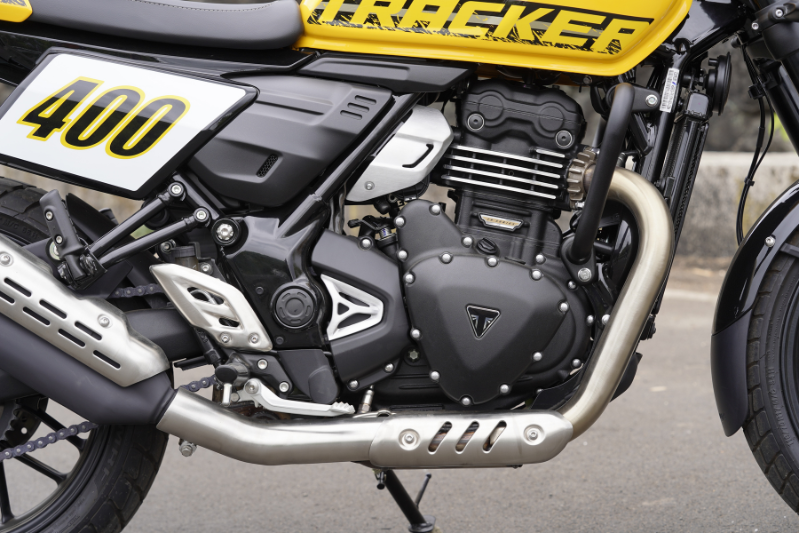
Powering the Tracker 400 is the same engine found across Triumph’s 400 range. However, it shares its state of tune with another racing-inspired sibling, the Thruxton 400 café racer. Having ridden the 398-cc Thruxton last year, I immediately noticed the relative lack of bottom-end torque compared to some of the other 400s. That said, it did not take long to adapt to the Tracker’s character.
While it is not as tractable at low speeds, neither is it a peaky, rev-hungry engine that demands constant attention to prevent stalling. In urban conditions, I found myself shifting between first and second gear, but the light clutch action and slick six-speed gearbox equipped with a quick shifter made the experience effortless.
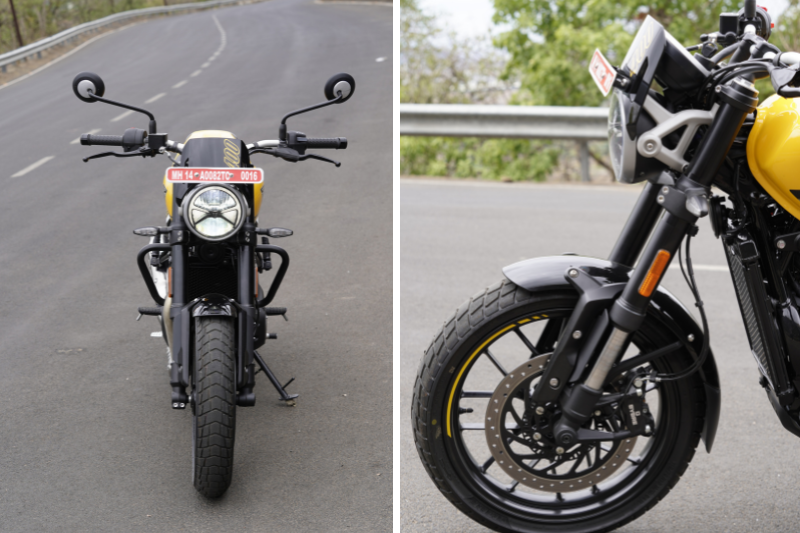
Getting onto the Old Mumbai-Pune Highway I twisted the throttle open. While in the city, the Tracker 400 can comfortably chug along above the 2,500-rpm mark, the engine pulls cleanly from around 3,000 rpm. This particular new unit felt smooth and refined. Vibrations are well controlled through most of the rev range, and even near the 6,000 rpm the engine remains relatively composed. As the revs climb further, there is a gradual increase in buzziness, but it isn’t overly intrusive. Overall, the engine does an impressive job for a 349-cc single-cylinder motorcycle.
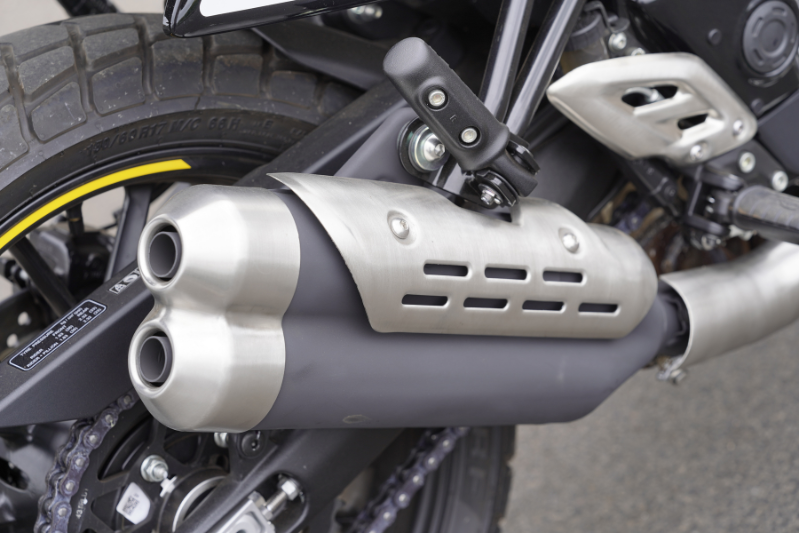
The suspension setup is on the firmer side and has been tuned to complement the Tracker 400’s flat-track-inspired character. While it is capable of tackling the occasional rough patch or light trail, its 162-mm ground clearance further reinforces it is not intended to be an off-road motorcycle, and is more suited to tarmac and well-maintained dirt surfaces.
As I approached an intersection and scrubbed off speed before turning towards our destination, the braking performance also left a positive impression. The front brake offers strong initial bite and ample stopping power, while the rear brake is progressive and easy to modulate, allowing for smooth and controlled inputs.
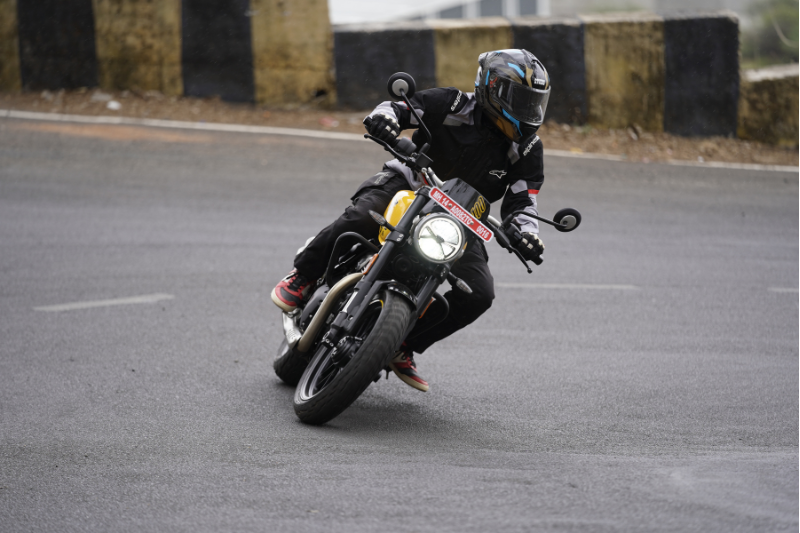
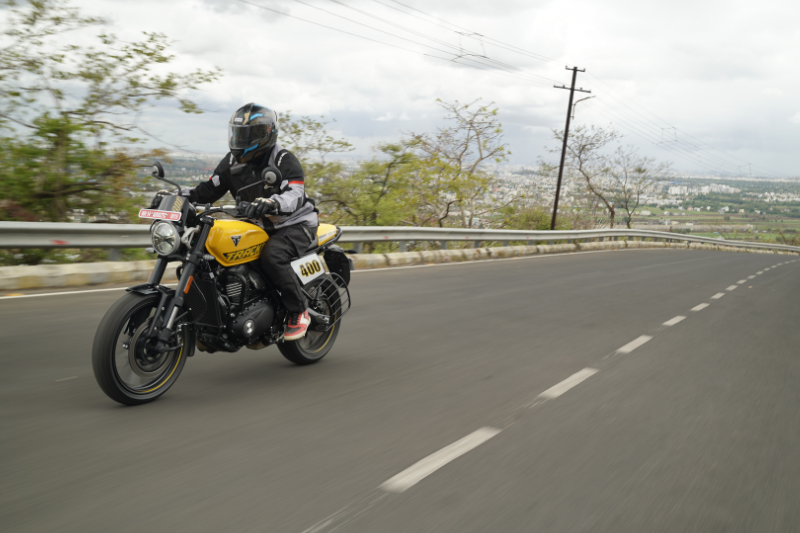
After finally reaching the hill roads on the outskirts of Pune, it was time to see how the Tracker 400 handled a series of corners. To my surprise, it performed remarkably well. The chassis showcased its strengths. Its relatively short wheelbase—the shortest among its 400cc siblings—combined with the suspension and grippy dual-purpose tyres, makes for a fun package. The tyres, in particular, offered ample grip. As luck would have it, rain accompanied us on the return journey. And even in the damp conditions, they maintained predictable grip levels.
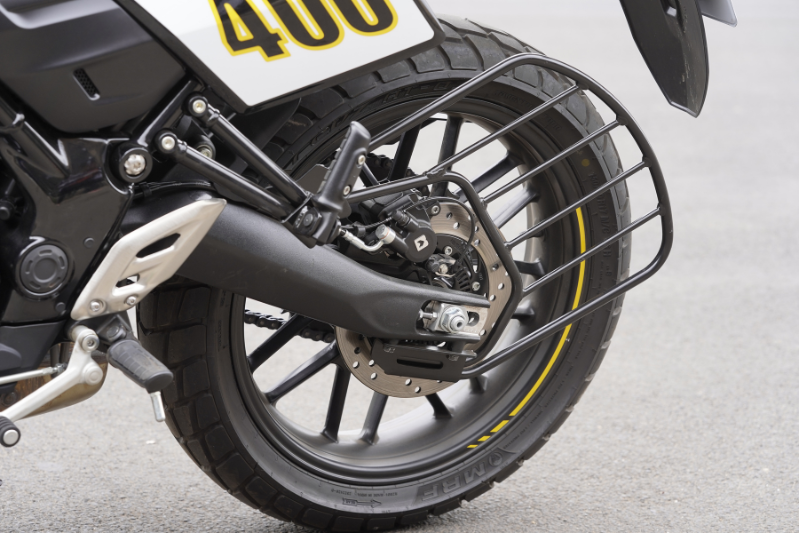
Taking everything into consideration, the Tracker 400 is a purpose-built motorcycle designed to deliver a fun, engaging and aggressive riding experience. It retains all the qualities that have made Triumph’s 400 platform popular. The switchgear feels premium and tactile, the fit and finish and the overall build quality is in line with what one expects from the British marque. Features such as switchable traction control and ABS further enhance confidence, particularly for riders stepping up from smaller-capacity motorcycles.
For those unfamiliar with street-trackers, the Tracker 400 may seem like a niche proposition. However, it is well worth considering. While it is not a dedicated flat-track racer, it offers a taste of the discipline’s character and riding style. More importantly, it encourages riders to adopt the elbows-out, chest-forward stance synonymous with the sport.
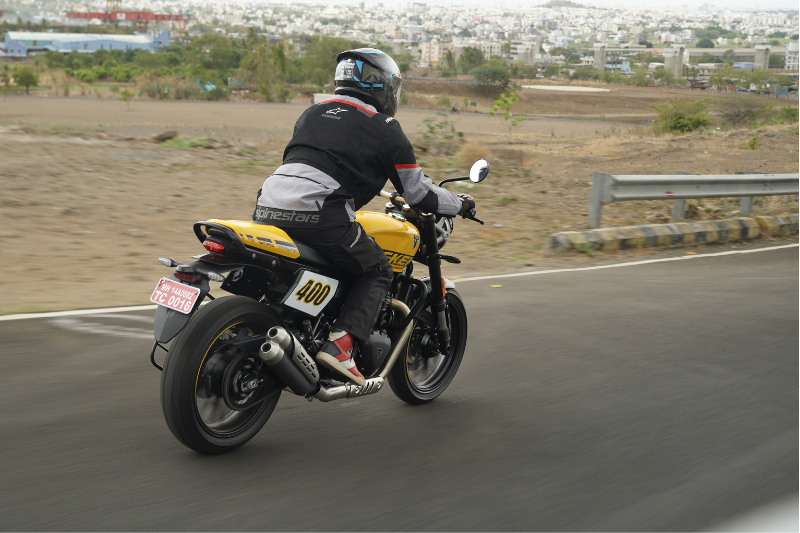
With flat-track racing steadily gaining momentum in India, the Tracker 400 arrives at an opportune time, offering enthusiasts a unique motorcycle that is as enjoyable on everyday roads as it is inspiring for aspiring flat-track riders.
Also Read: 2026 Triumph Speed 400 – First Ride Review
Leave a Reply