
After the whirlwind introduction a few months ago, we finally got to spend some quality time with the TVS Orbiter.
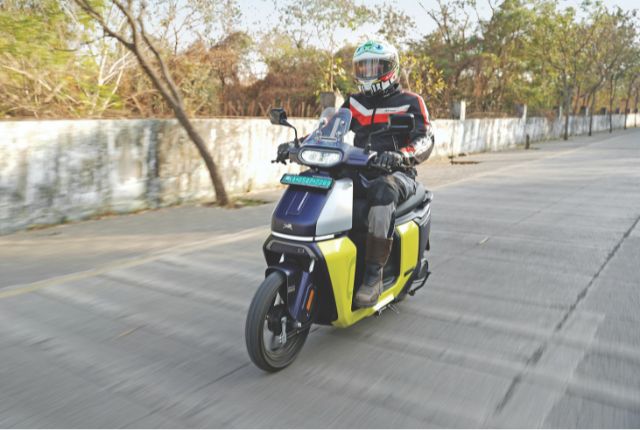
TVS’ electric scooter innings has been a mixed bag. While the iQube’s practical, family scooter roots have made it ubiquitous, the X’ sporty intentions and chiefly, high price tag, has found few buyers. So, TVS’ third offering, ostensibly positioned as a funky runabout for the younger crowd, has big shoes to fill.
And fill them it does; even from afar. The unconventional silhouette and TVS’ colour choices really seal the deal: our test bike’s Neon Sunburst colour had people turning and staring in droves. Moreover, elements like the wraparound DRLs’ and tail-lights’ edges doubling up as indicators are a smart touch.
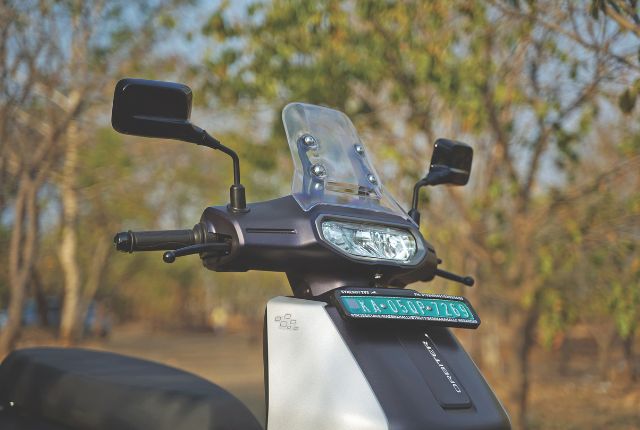
Riders of all sizes–including this six-foot-two and nearly ninety-kilogram correspondent–will be at ease on the Orbiter’s flat saddle, as it neither splays out shorter riders’ legs too wide, nor leaves the pillion wanting for space behind taller riders. The flat and long floorboard, too, keeps even taller riders’ knees in a natural bend, with adequate knee room except, understandably, in lock-to-lock turns. The tall flyscreen, though, sticks out like a sore thumb, spoiling the otherwise sleek outline.
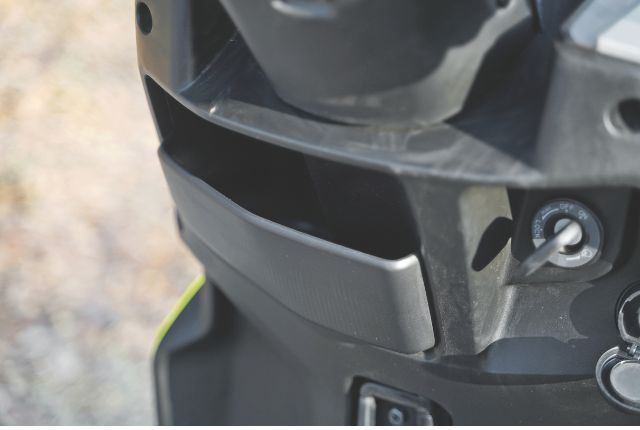
Glance further down, and the opening to the apron-mounted cubbyhole may seem unintuitive to use. But if you’re finding it difficult to take out your mobile, won’t it be the same for a potential thief? Or for the mobile itself, if you go over a bump? So take a bow, TVS. Er, wait; the USB port on the handlebar stalk means your mobile is both accessible and can be replenished on the move. Yes, detractors may say the cubbyhole’s hard plastic could damage their prized possession, and prefer to keep it in their bag. For them, TVS has equipped the apron with a tough-looking hook that snaps shut when you secure your bag on the floorboard. Ok, TVS, now you can take that bow!
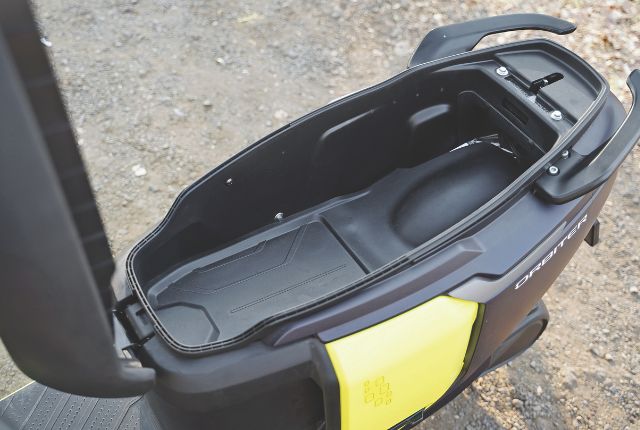
But what if your pillion has a backpack too? Well, the underseat storage is long and wide enough to fit it all in, without needing to relocate the charger either. That said, it has a major flaw: its lack of height, which TVS spins by saying the underseat storage can fit two “half-face” helmets. But if you both have full-face helmets–as you should, as anything less makes zero sense from a safety perspective–you’ll need to carry them around when off the vehicle.
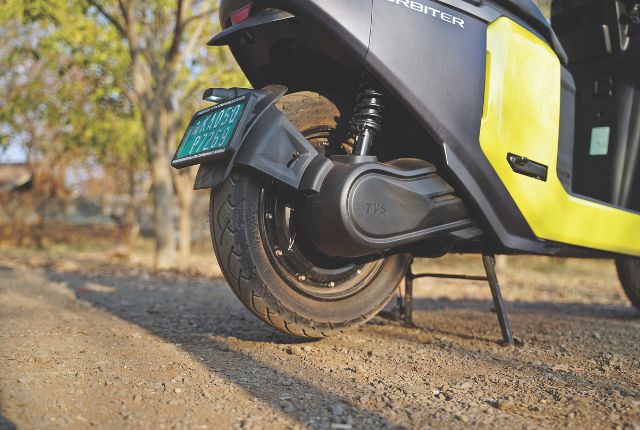
Anyway, you set off– in Eco mode, at first–and find the progress adequate, with the motor whine lost to wind noise post 25-30 km/h. The staggered wheel size–14 inches front, 12 inches rear–make changing directions easy, without the front wheel thudding into every pothole. The preload adjustment for the twin rear shocks, meanwhile, makes the ride quality relatively comfortable, though far from plush, even when riding with a pillion.
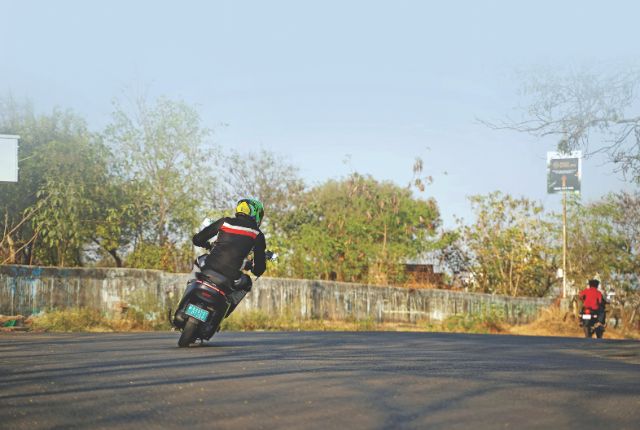
Once out of the bylanes, you switch to City mode. The acceleration now feels more brisk, and you see 65 km/h (or a bit more, downslope) on the LCD console. The light scooter allows you to overtake effortlessly, while the large mirrors offer a clear view out back. However, spirited riding exposes more chinks in the Orbiter’s armour. The skinny tyres, good when filtering through traffic at slower speeds, seem skittish over patchwork and may even tram-line over expansion joints. The wind noise, too, seems to amplify, along with an inconsistent buzz; the ungainly flyscreen is the culprit in both cases.
Now, credit where it’s due: the motor seems at ease even at V-max for extended periods. But your wrist isn’t as comfortable. However, pressing the circular button on the left switchgear once, then twice, engages cruise control. No set button, no toggling through menus, and getting back to normal riding needs just a flick of the throttle or small squeeze on the brakes.
Soon, you realise your joyride has brought you a fair distance from home. Not that you’re complaining: the pliant yet firm seat is supportive enough to easily handle extended stints in the saddle. Nevertheless, home is almost 40 km away, and you just have 50 per cent charge left. So you connect your smartphone to the Orbiter via TVS Smartxonnect, and set off, following the tulip-based navigation prompts on the console.
You’re not relying on cruise control now; the boost to range provided by the regen–which doesn’t activate when in cruise control–keeps your mind at ease. The headlight, seemingly bright within city limits, lacks both throw and spread on the open road. This means you’ll need to stay extra alert for potholes, pedestrians and the like, as the drum brake setup makes shaving off speed effectively that much more difficult.
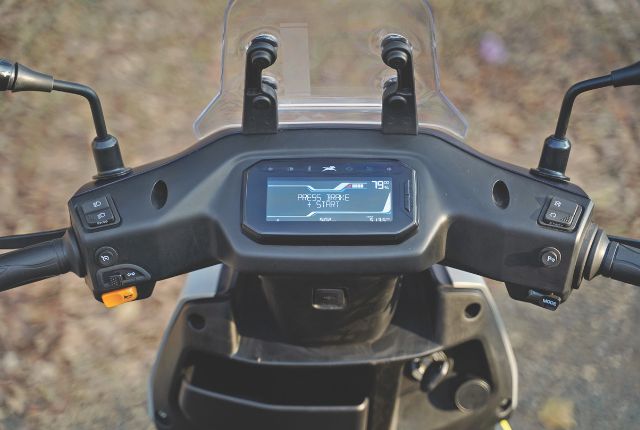
You’re halfway up an incline when a call reminder flashes on screen. You halt on the side; the beep from the hill hold engaging giving you the peace of mind to take both hands off the bars and attend to the call. This thoroughly intuitive feature–that senses the scooter rolling back even a smidgen when on an incline, and activates with just a squeeze on either of the brakes–is another feather in the Orbiter’s cap.
You’re finally home, with the Orbiter at around 10 per cent charge, despite you covering over 80 km through weekday traffic. You plug in the charger, and reckon it’ll need to stay connected well past dinner time, as the lack of a fast charger means full charge from anything below 20 per cent takes at least four hours.
Yes, the Orbiter has its fair share of shortcomings: the lack of a front disc, the relatively underpowered headlight, the buggy app connectivity, the staggered wheel sizes which take the fun out of long, sweeping turns, and essentials like the main stand being offered as paid accessories.
Nevertheless, being that the Orbiter is a new offering, all these issues could be easily addressed with an update, or even improved upon with an “Orbiter ST”. But even in its current guise, this fast, practical, and funky scooter has a lot going for it. So for those who aren’t bothered by the lack of a TFT screen or the unconventional looks, the Orbiter could well be an alternative, instead of a compromise, to the iQube.

Leave a Reply