
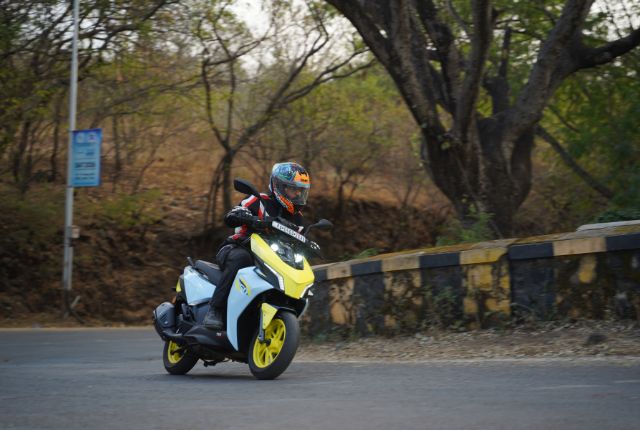
The TVS Ntorq 150 is by far the funkiest scooter we have ridden
Story: Anvay Mahajan
Photography: Siddharth Dadhe
Trust me, none of the photos from this scooter shoot were taken in Goa. That’s just the effect they have on you. One ride on this scooter, and you’re instantly transported into full Goan mode. My playlist automatically switched to early-2000s Bollywood party anthems, the kind that scream beaches, sunsets, and carefree fun. This funky machine is essentially the elder cousin of the TVS Ntorq 125: the Ntorq 150. And we had it for a week with us in Goa… sorry, Pune.
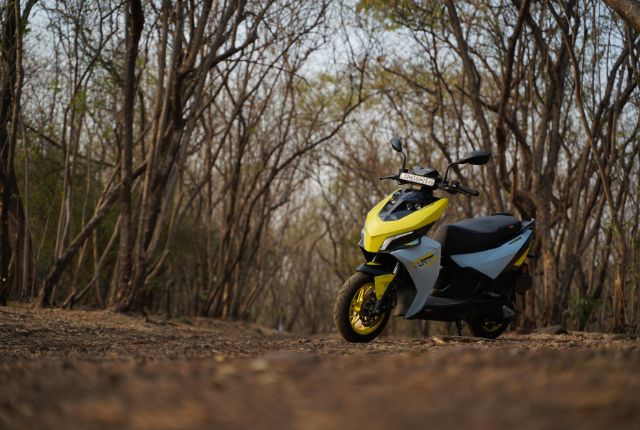
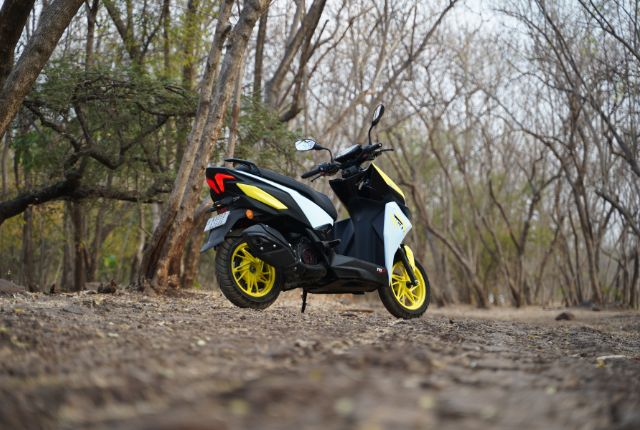
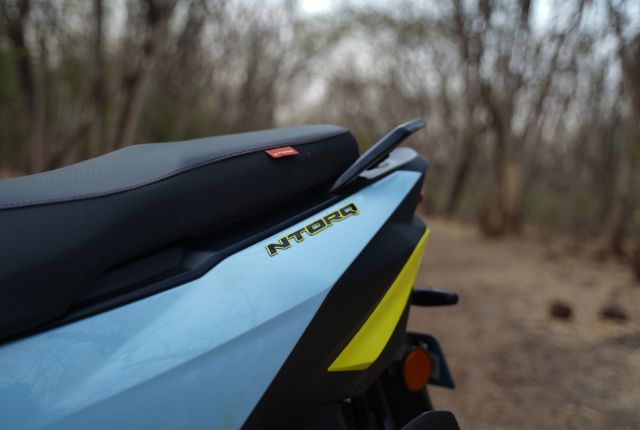
The design is unapologetically youth-focused and steers clear of anything traditional. Up front, you get a fixed LED headlamp with the daytime running lights (DRL) neatly integrated into the apron. A prominent winglet sits up front, too; now, whether it contributes to performance is debatable, but it certainly adds to the visual drama. There is no head and only an instrument console is mounted on the handlebar. This layout gives the scooter a “naked” look and adds a sharper, more aggressive edge to the overall design. From the side, drawing an imaginary straight line across the floorboard reveals strong similarities with the Ntorq 125 in the rear half. Several elements are shared as well, including the pillion grab-handles. A welcome addition on the Ntorq 150 is the small storage compartment placed next to the ignition switch. Under-seat storage is smaller compared to the Ntorq 125’s, but that’s a compromise I’m willing to make for the extra horsepower on offer. The colour options are extremely funky, and while they complement the bold design, this non-traditional approach may not appeal to riders across all age-groups. On the downside, there are some noticeable build quality concerns. Despite covering only about 1,100 kilometres, the scooter had already developed a few squeaks and rattles, along with slightly loose panels. The panel-gaps also tend to trap a fair amount of dust, which is hard to ignore.
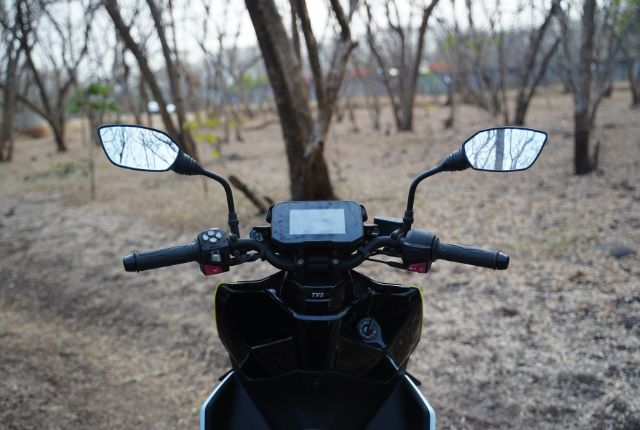
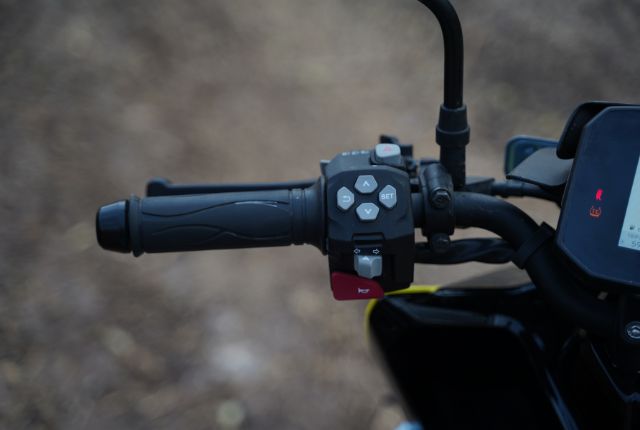
The TFT instrument console and switchgear set-up are easily the best I’ve experienced on any scooter so far. The layout isn’t overcomplicated—it’s intuitive, easy to read, and sufficiently bright in all conditions. The switchgear itself feels tactile and premium, reinforcing the sense of quality every time you interact with it. The only omission in the instrument console is a fuel economy readout, though this is hardly a deal-breaker. Similarly, the addition of a light inside the under-seat storage would have improved day-to-day usability, but these are minor misses in an otherwise well-executed set-up.
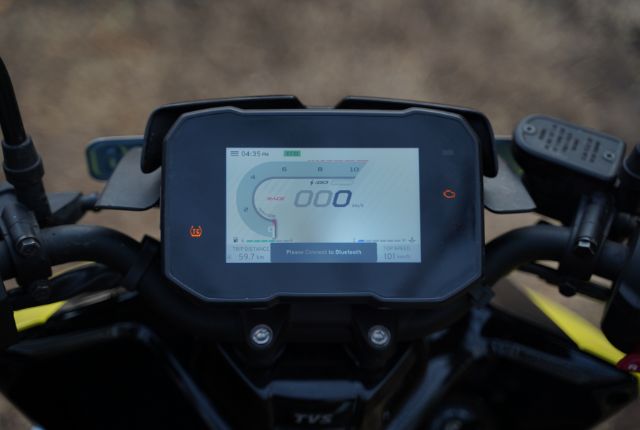
Powering the Ntorq 150 is a 149.7-cc, air-cooled engine producing 13.2 hp and 14.2 Nm. The motor feels refined and delivers a punchy low end. TVS claims a 0–60 km/h sprint time of 6.3 seconds, making it the quickest scooter in its segment. In real-world riding, I even managed a top speed of 100 km/h. The scooter offers two riding modes: Street and Race. Street keeps things calm and is clearly tuned for better fuel efficiency. However, every time you start the scooter, it reverts by default to Street mode with the auto start-stop (ISS) system switched on. This soon became irritating, as I had to manually disable it on every ride. Switch to Race mode and the Ntorq 150 activates TVS’ iGo Assist, which provides an instant boost when you open the throttle aggressively. It proves genuinely useful in traffic and while overtaking. The system recharges within a few seconds after each use, adding a fun, almost video game–like element, reminiscent of playing Need for Speed or Asphalt with a rechargeable nitro boost.
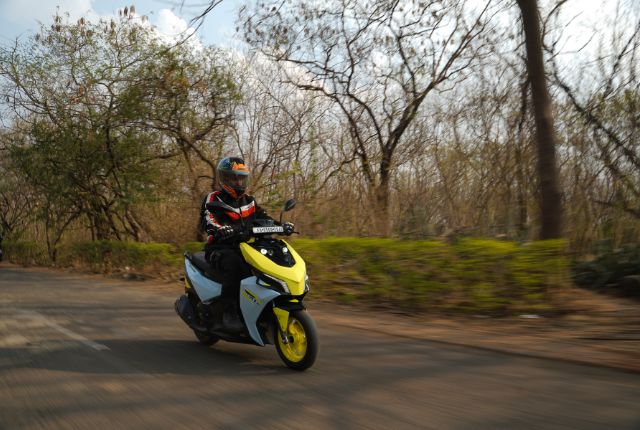
The suspension is tuned on the firmer side, though it is not as stiff as that on the Aprilia SR 175 hp.e. This set-up makes the scooter great fun through corners. On open roads, it performs adequately, but it is truly fun in an urban environment. That said, broken or poorly surfaced roads do feel harsh, reminding you of the firm tuning. Weighing just 115 kilograms, the scooter feels light, nimble, and flickable, especially in traffic. Braking duties are handled by a front disc and a rear drum set-up with a single-channel anti-lock braking system (ABS). Performance is adequate, with enough stopping power for everyday riding. You also get switchable traction control, arguably unnecessary for most riders, but a welcome addition for stunt and off-road enthusiasts. Overall, the Ntorq 150 feels more like a street-focused performance scooter. Its light weight makes it easy to handle, overtaking is effortless thanks to the iGo Assist, and it thrives in city conditions. However, the 12-inch wheels do limit stability on open roads.
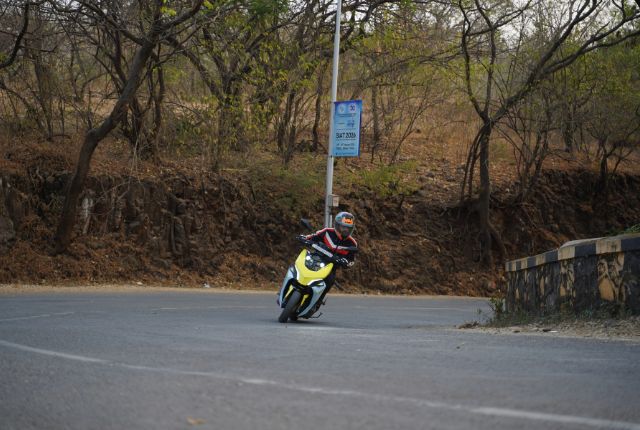
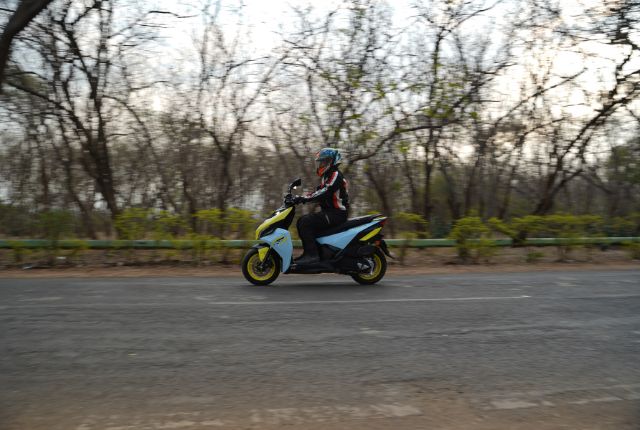
The TVS Ntorq 150 is priced from Rs 1.09 lakh, with the top-end variant going up to Rs 1.18 lakh (both prices ex-showroom). At these prices, we believe it is fairly positioned for what it offers. The scooter competes with the Hero Xoom 160, Yamaha Aerox 155, and Aprilia SR 175 hp.e. However, with the Hero and Yamaha leaning more towards the maxi-scooter space, the Ntorq 150’s closest rival remains the Aprilia. While the SR 175 does offer better braking performance, the Ntorq 150 feels like a more well-rounded package overall. Its main drawbacks are its firm suspension and a design language that may not appeal to everyone. That said, I personally love the way it looks, and it fits my taste perfectly.

Leave a Reply