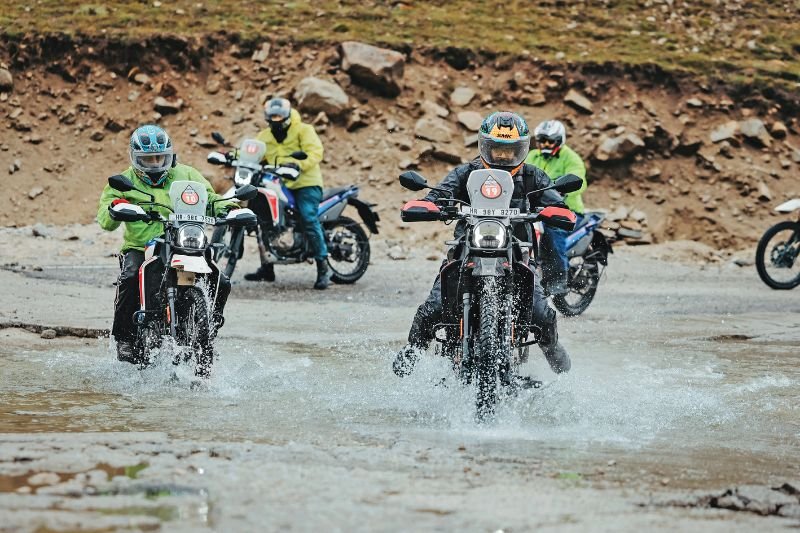
The Hero Magnetic Frontier 2026 elevated me to new heights, both physically and as a rider
Story: Anvay Mahajan
Photography: Hero MotoCorp
For most Indian motorcyclists, a ride to Ladakh is the ultimate dream expedition. But the region can be unforgiving if taken lightly. Thin air, sparse habitation, and stretches devoid of mobile phone connectivity can make the journey challenging and, at times, dangerous. So, when I was invited to take part in the Hero Magnetic Frontier 2026, I was equal parts excited and nervous. I had heard plenty of stories about the challenges of riding in Ladakh and, to make matters more interesting, I wasn’t particularly experienced in off-roading. Nevertheless, I took up the challenge and flew to Leh. By then, Batch One had already begun its journey from Chandigarh, while I joined the XClan for Batch Two, dedicated entirely to the Ladakh ride. I own a Hero Xpulse 200 4V, but this time I would be riding its elder sibling, the Xpulse 210.
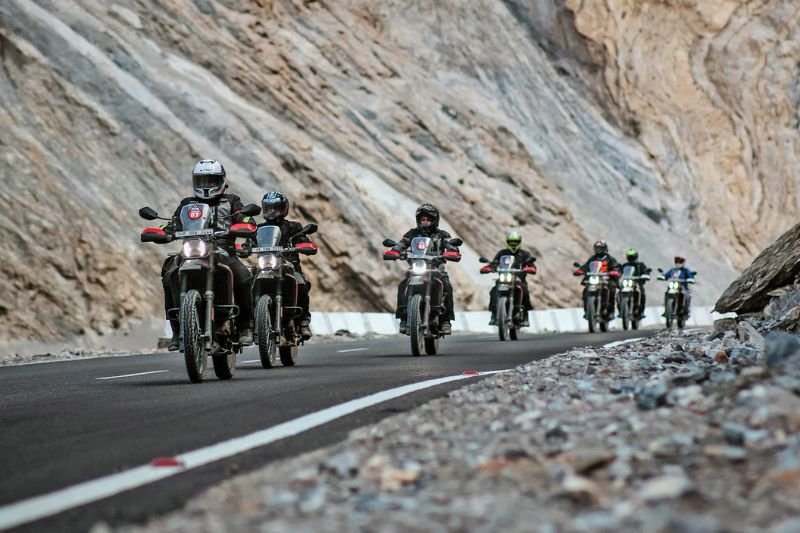
But before going deep into the desert, let me give a short introduction to the XClan. Launched in 2022, XClan is Hero MotoCorp’s customer-driven riding community, initially created for the Xpulse owners and now expanded across its premium motorcycle portfolio. The initiative aims to bring riders together through shared experiences, organised rides, and community activities. Over the years, XClan started offering experiences ranging from shorter group rides to longer adventure-focused outings. The community also hosts initiatives that connect motorcycling with broader cultural and national themes. Today, XClan brings together riders across Hero’s premium range—including the Xpulse, Xtreme, XOOM 160, and XMR—and the community is growing day by day.
The day I landed in Leh, I was asked to rest and get acclimatised to the high-altitude conditions. Later that day, we were briefed about the ride and introduced to the coordinators, crew, and fellow riders. The group was a diverse mix of Xpulse 210 owners, Hero dealership owners, and Hero employees. Hero had also organised an internal competition for its employees, with the winners earning a spot on the expedition. The convoy consisted of around 19 motorcycles, two spare bikes on a maintenance pick-up, a dedicated supplies and spares vehicle, support cabs with backup riders, an ambulance with doctors, and a camera crew vehicle.
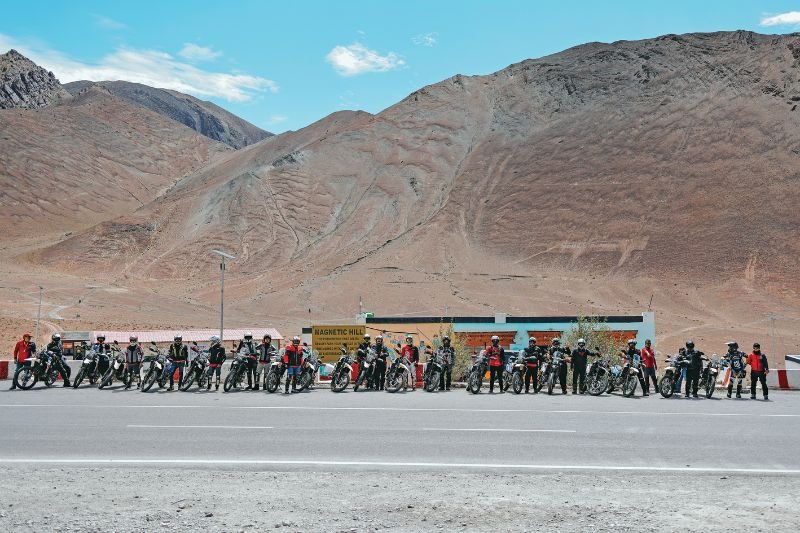
The first day was spent in a local tour around Leh, giving us time to acclimatise and get familiar with our motorcycles. The moment I swung a leg over the Xpulse 210, I could tell it was slightly taller than my Xpulse 200 4V. We first stopped at Gurudwara Shri Pathar Sahib before heading to Magnetic Hill for a quick photo session and then the Ladakh Sangam, where the Zanskar and Indus rivers meet against a stunning mountain backdrop. We wrapped up the day with an off-road training session at the Ladakh Enduro Park. I specifically wanted to learn how to tackle a tight hairpin while descending a hill, and by the end of the session, I had finally got the hang of it. Later, we visited the Hall of Fame and paid tribute to the Kargil war heroes.
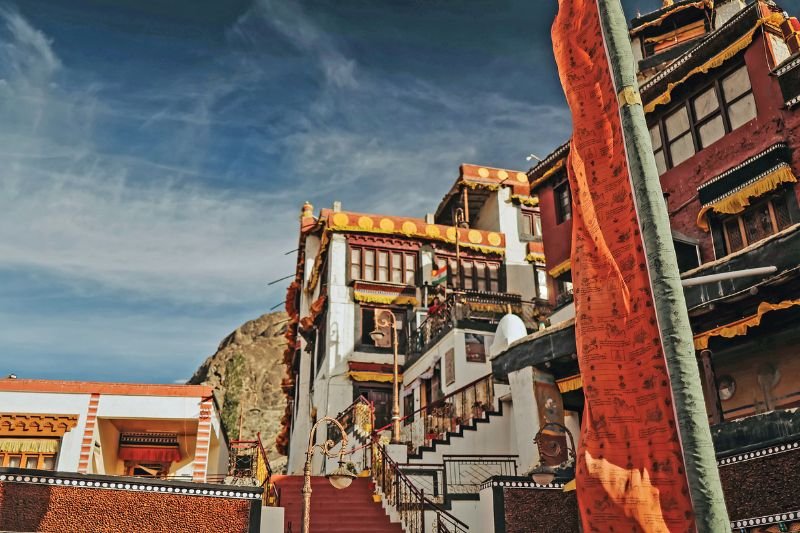
Day two took us towards Hunder, around 130 kilometres from Leh. Before entering the Nubra Valley, we had to tackle our first real obstacle: Khardung La. At 18,380 feet, it is one of the highest motorable passes in the region. Surprisingly, the climb was relatively easy, although the thinning air meant the Xpulse 210 needed more throttle and higher revs. After a quick photo stop, we headed for lunch at an incredibly scenic spot beside a stream, surrounded by mountains, greenery, yaks, and local dogs. With the sun out, it felt more like a picnic than a high-altitude expedition. After lunch, we rode ATVs at the sand dunes before heading to Diskit Monastery. The tranquillity inside the monastery was almost therapeutic, and I climbed all the way to the top without feeling out of breath. We eventually reached Hunder at around 7.30 pm.
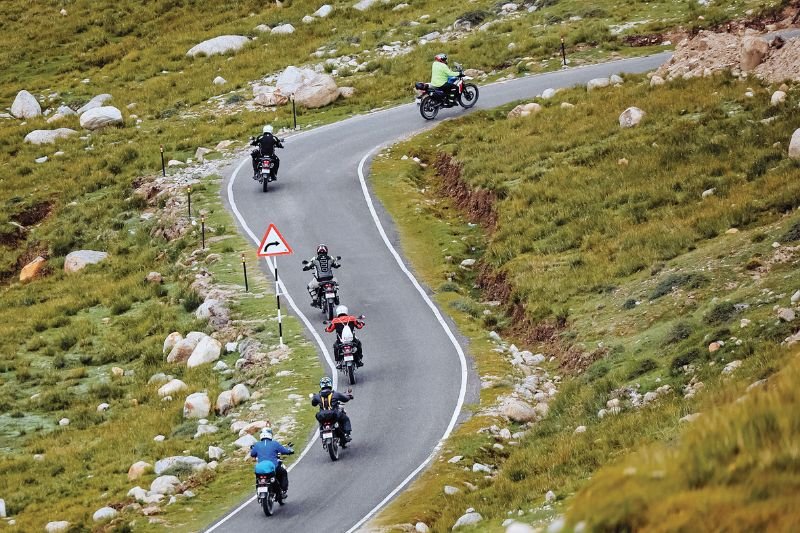
The next morning began at the Hunder sand dunes, famous for their camel rides. After a quick photo session, we set off towards Pangong Tso. An off-road section connected us to the ATV point from the previous day, where I managed a few powerslides, unfortunately with no photographers around to capture them. Soon, we began climbing towards Wari La. The initial stretch was breathtaking, with landscapes reminiscent of the Scottish Highlands, but the weather soon turned brutal. Rain and cold winds together made for a miserable combination. By the time we crossed Wari La and Chang La, we were completely soaked. We even used the heat from the Xpulse 210’s exhaust to dry our gloves. We eventually reached Pangong Tso late at night, cold, soaked, and shivering.
The next morning, we headed to Pangong Tso to recreate a few iconic 3 Idiots scenes. With the sun out, we also dried our riding gear before setting off for Hanle. The route was, perhaps, the most scenic of the expedition, with long, dead-straight roads cutting through a desert-like landscape and a few fast corners. On one stretch, I managed a top speed of 117 km/h. We stopped at the Rezang La War Memorial to pay our respects to the fallen soldiers. Later, light showers brought out a triple rainbow, the first I had ever seen. We reached Hanle early, but its remoteness was immediately apparent: there was no mobile phone reception and electricity was available only between 7.00 pm and 11.00 pm.
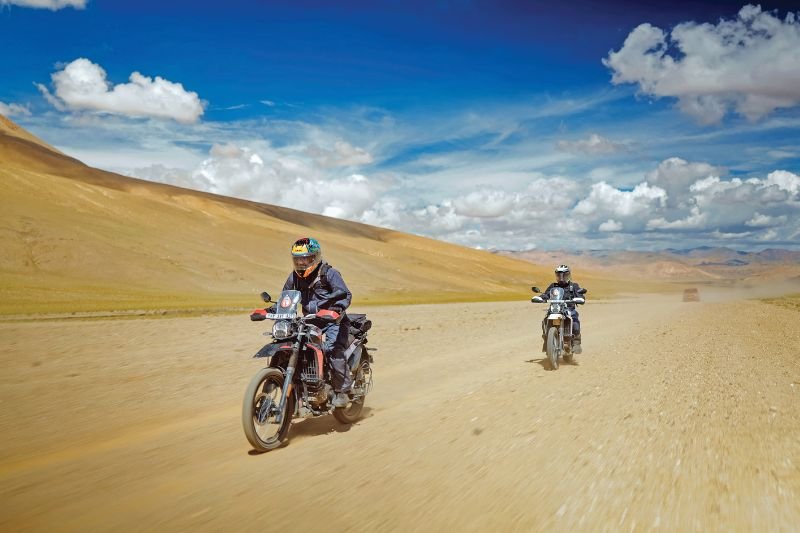
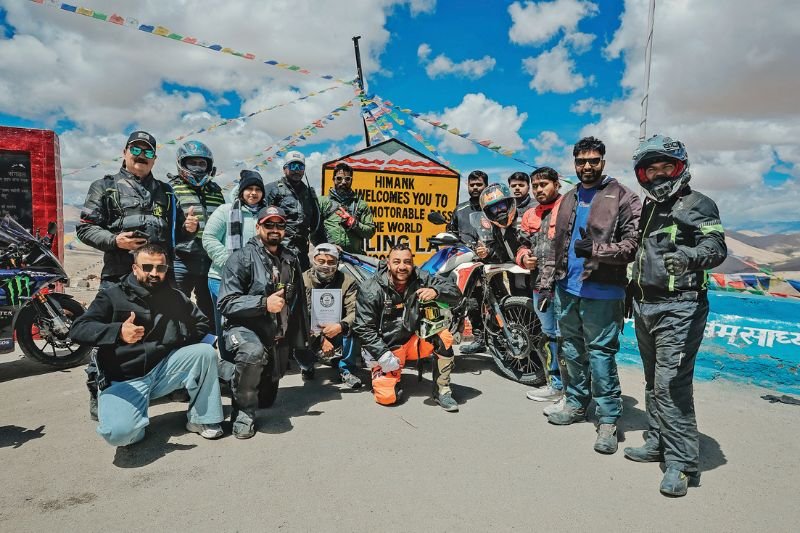
The following day was the ultimate challenge: touching 19,024 feet at Umling La, the highest motorable pass in the world to date. Some riders were advised by the doctors not to attempt the climb, but I was cleared to go. The ride began with a 30-40 km open, arid off-road section, which we covered at around 70-80 km/h before reaching the Border Roads Organisation’s excellent roads. As we climbed higher, temperatures dropped sharply and the thin air began to affect both me and the motorcycle. Keeping the Xpulse 210 in second and third gear, we slowly made our way and finally reached Umling La. It was a very proud moment for me. However, after a few minutes at the top, I began feeling uneasy and immediately started my descent. At the lunch stop, I ate and drank like I hadn’t seen food or water in days—and, oddly enough, remained extremely hungry for the next three days.
The next morning marked the final leg from Hanle to Leh, a roughly 280-km ride that we planned to cover with three stops en route. However, I was dizzy and struggling with acidity from the start. We maintained an average of around 80 km/h and stopped after 140 km for tea. By then, the nausea had worsened, so I ate something and handed the final 140-km leg to a reserve rider. The last 140 km turned out to be an excellent stretch from a rider’s perspective, and I was disappointed to miss it. But in conditions as demanding as those in Ladakh, health has to come first.
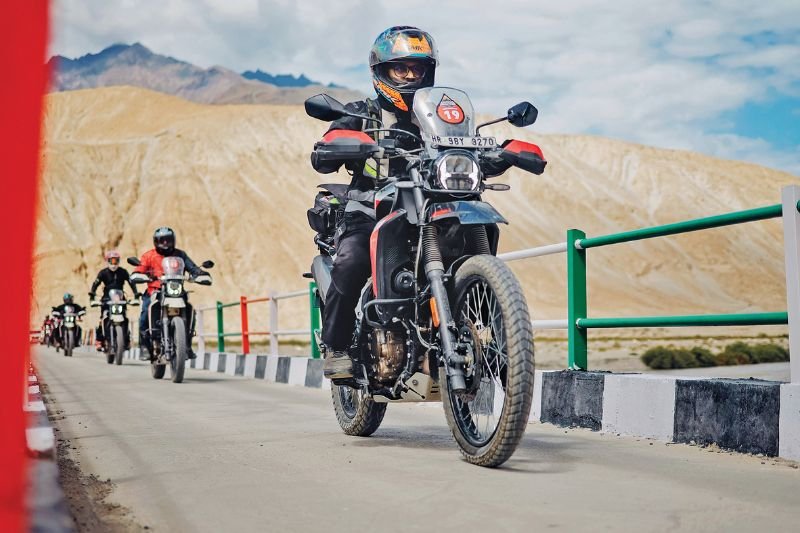
We reached Leh at around 2.30 pm. Looking back, I realised that I had picked up several new skills on the Xpulse 210, from engine braking and off-roading to better gear selection. The motorcycle felt almost tailor-made for Ladakh. Throughout the expedition, I had no mechanical issues and only needed to check the tyre pressures once. That said, I felt the low-end torque could have been stronger. Compared to my Xpulse 200 4V, the 210 feels more like an adventure tourer than a trail bike. It isn’t particularly fast, but it has its own pace and it encourages you to enjoy the journey.
By the end of the expedition, I had covered 985 km, returned around 29 km/l, reached a maximum elevation of 19,024 ft, and achieved a top speed of 117 km/h. More importantly, I came back with a few good friends, countless memories, and plenty of stories I will be able to tell my nephews and nieces.